What do you need to run an arcade?
Running an arcade requires space, 15–30 machines, licensing, staffing, and solid cash reserves. Here's a complete breakdown of what's involved.

Highlights
- A commercial arcade requires 15–30 machines ($50,000–$120,000) plus a high-traffic location lease ($3,000–$15,000/month)
- Food and beverage capabilities are essential for diversifying revenue beyond coin-operated gaming alone
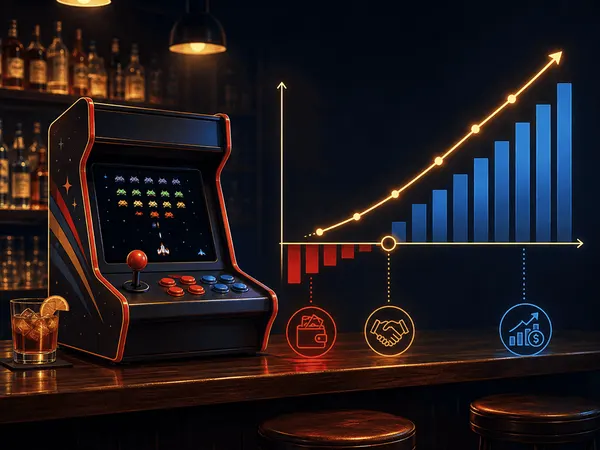
- Operating reserves covering 6–12 months of expenses are critical for surviving slow periods after launch
- Ongoing maintenance should be budgeted at 10–15% of monthly revenue to keep machines in reliable condition
Running an arcade requires commercial space, gaming equipment, proper licensing, staffing, and ongoing capital for operations and maintenance. Essential components include 15-30 arcade machines costing $50,000-$120,000, a lease in a high-traffic location at $3,000-$15,000 monthly, business and entertainment permits, point-of-sale systems, and 2-5 employees. Most successful operations also need food and beverage capabilities to diversify revenue beyond pure gaming.
Arcade operation demands continuous investment beyond initial setup. Machines require regular maintenance, revenue-based game rotation, and eventual replacement. Operating reserves covering 6-12 months of expenses prevent closure during slow periods.
Core operational requirements include:
Gaming equipment: 15-30 machines at $2,000-$6,000 each
Commercial lease: 1,500-3,000 sq ft in high-traffic area
Licensing: Business, entertainment, possibly liquor permits
Staffing: Minimum 2-5 employees for coverage and maintenance
Point-of-sale system: Transaction and revenue tracking
Insurance: Liability, property, and equipment coverage
Operating capital: 6-12 months reserve for sustainability
Maintenance budget: 10-15% of revenue for repairs and upkeep
Many arcade operators underestimate the difference between opening and sustaining a venue. Initial excitement carries through launch, but ongoing operational discipline determines survival past 18-24 months.
How many employees does an arcade need?
Arcades typically need 3-8 employees depending on size and operating hours. Small venues with 15-20 machines require minimum 3 part-time staff for shift coverage, customer service, and basic maintenance. Mid-size operations with 25-40 machines need 5-8 employees including full-time managers, shift supervisors, attendants, and dedicated technicians. Large family entertainment centers employ 15-30+ staff across multiple departments.
Staffing costs represent 20-30% of total operating expenses. Underestimating personnel needs leads to poor customer service, inadequate maintenance, and owner burnout from excessive personal hours.
Typical staffing structure:
Small arcade (15-20 machines): 3-4 part-time staff
Manager or owner: Operations oversight, 40+ hours weekly
Floor attendants: Customer service, 2-3 part-time positions
Maintenance technician: Part-time or contracted services
Mid-size arcade (25-40 machines): 5-8 employees
General manager: Full-time operations leadership
Assistant manager: Shift coverage and supervision
Floor attendants: 3-4 positions covering operating hours
Technician: Full-time or part-time equipment maintenance
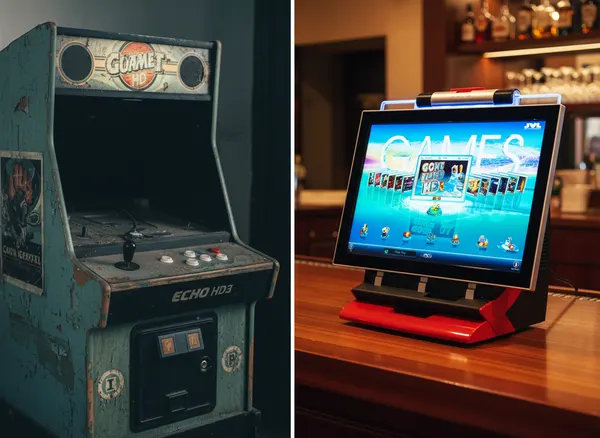
Labor challenges include high turnover in entry-level positions, scheduling complexity for extended hours, and finding technicians with specialized arcade repair skills. Home arcade machines eliminate all staffing concerns while providing unlimited entertainment access.
What ongoing costs do arcades have?
Ongoing arcade costs include rent, utilities, maintenance, staffing, and inventory replenishment totaling $8,000-$35,000 monthly. Commercial lease payments represent 30-40% of recurring expenses at $3,000-$15,000 monthly. Utilities including electricity, internet, and climate control cost $800-$2,500 monthly. Staff payroll runs $4,000-$15,000 monthly. Equipment maintenance and repairs average $1,000-$3,000 monthly. Additional costs include insurance, licensing renewals, marketing, and prize inventory for redemption games.
Operating cost structure determines profitability thresholds. Venues must generate sufficient revenue to cover fixed and variable expenses before achieving any profit. Most arcades require $15,000-$50,000 monthly revenue to reach break-even.
Monthly recurring expense breakdown:
Rent and occupancy costs: $3,000-$15,000 (30-40% of costs)
Payroll and labor: $4,000-$15,000 (25-35% of costs)
Utilities and internet: $800-$2,500 (8-12% of costs)
Equipment maintenance: $1,000-$3,000 (10-15% of costs)
Insurance and licensing: $400-$1,500 (3-6% of costs)
Marketing and promotions: $500-$2,500 (5-8% of costs)
Supplies and miscellaneous: $400-$1,200 (3-5% of costs)
Seasonal fluctuations complicate cash flow management. Summer months and holiday periods generate peak revenue while January through March often show 30-40% declines. Adequate reserves prevent crisis during predictable slow periods.
How do arcade operators maintain profitability?
Arcade operators maintain profitability through diversified revenue streams, operational efficiency, and strategic game management. Successful venues generate 60-70% of revenue from food and beverage sales rather than gaming. They optimize labor costs through efficient scheduling and cross-training. They track performance data on individual machines, replacing underperformers within 30-60 days to maximize revenue per square foot. Event hosting and private bookings create additional income during traditionally slow periods.
Profitability requires treating arcades as hospitality businesses rather than gaming ventures. Arcade machines create atmosphere and draw customers, but ancillary services generate margins.
Profitability strategies include:
Food and beverage emphasis: Higher margins than game revenue
Private event hosting: Premium rates for birthday parties, corporate events
Membership and subscription models: Predictable recurring revenue
Strategic game placement: High-performers in premium floor positions
Proactive maintenance: Minimizing downtime and emergency repairs
Dynamic pricing: Premium rates during peak hours or special events
Operational efficiency: Labor optimization and waste reduction
The most successful operators possess strong business fundamentals beyond gaming enthusiasm. They understand unit economics, track key performance indicators daily, and make data-driven decisions about game mix, staffing levels, and promotional strategies. Many discover that operational complexity and thin margins make home entertainment investment more appealing than commercial venue operation.
Frequently asked questions
How much does it cost to open a commercial arcade?
A serious commercial arcade requires $50,000 to $300,000 in startup capital depending on scale. A small 1,000–1,500 sq ft location with 15–20 machines typically runs $50,000–$120,000 in machines plus location buildout. Full family entertainment centers can exceed $500,000.
What kind of location does a commercial arcade need?
High foot traffic is non-negotiable. Mall locations, downtown entertainment districts, and tourist areas work best. Typical rent runs $3,000–$15,000+ per month depending on city and traffic. A 1,500–3,000 sq ft space is the practical minimum for a viable arcade business.
How many arcade machines does a typical arcade operate?
A small commercial arcade runs 15–30 machines. Medium-size venues operate 30–60. Large FECs may have 80–150+ machines plus VR, redemption games, and other attractions. The right number depends on square footage, customer volume, and the revenue mix between gaming and other services.
Do you need food and beverage to make an arcade profitable?
Almost always, yes. Pure coin-op arcades rarely produce enough revenue per square foot to cover modern commercial rent. Food, beverages (alcohol where licensed), and party packages typically account for 40–70% of revenue at successful venues. The arcade attracts customers; food and drink monetize their visit.
How much operating reserve does a new arcade need?
Industry standard is 6–12 months of operating expenses set aside before opening. This covers rent, payroll, utilities, and maintenance during the ramp-up period when revenue is still building. Undercapitalized arcades that try to launch with less reserve typically fail within 18 months.