What is the most profitable arcade game?
Redemption and skill games earn $300–$600/month — far ahead of classic video games. Discover the most profitable arcade game types for your venue.

Highlights
- Redemption and ticket games consistently generate $300–$600 monthly per unit in high-traffic venues
- Classic video games average $100–$200 monthly — profitable but lower-earning than redemption machines
- VR experiences can reach $400–$500 monthly in optimal high-footfall locations
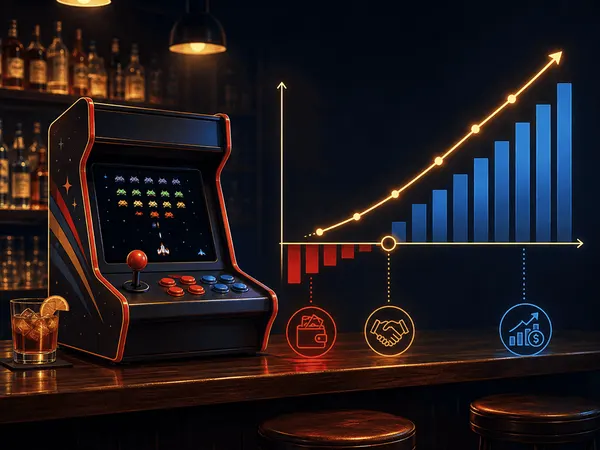
- Profitability depends more on location and foot traffic than the specific game title or category
The most profitable arcade games are redemption games and skill-based prize machines, consistently generating $300-$600 monthly per unit in family entertainment centers. Classic examples include claw machines, coin pushers, and ticket redemption games. Traditional video games typically earn $100-$200 monthly, while VR experiences can reach $400-$500 in optimal locations. Profitability depends more on location traffic and game condition than specific titles.
Revenue generation shifted dramatically from arcade gaming's golden era. In the 1980s-1990s, fighting games like Street Fighter II and racing games generated peak earnings. Modern operators focus on games encouraging repeat plays and prize redemption rather than pure gaming skill.
Highest-earning game categories:
Redemption and ticket games: $300-$600 monthly average
Prize crane and skill games: $250-$500 monthly average
VR experiences and motion simulators: $300-$600 monthly average
Photo booths and novelty attractions: $200-$500 monthly average
Classic fighting and racing games: $150-$300 monthly average
Puzzle and casual video games: $50-$150 monthly average
Profitability calculations must include maintenance costs and failure rates. Prize games require constant restocking and mechanical repairs. Arcade machines designed for home use eliminate these operational concerns while providing unlimited entertainment value.
Why do redemption games make more money?
Redemption games generate higher revenue because they exploit psychological reward systems through variable prizes and perceived winning opportunities. Players spend more pursuing tickets or prizes than they would on standard video games. The games create a gambling-adjacent experience legal for all ages, encouraging continuous play through near-miss scenarios and visible prize displays.
The business model leverages prize costs versus play revenue. Operators typically spend 30-40% of revenue on prize inventory, retaining 60-70% as gross profit before operational costs. This margin exceeds traditional video games generating pure coin revenue.
Redemption game advantages include:
Higher average spend per player visit
Repeat play encouraged by cumulative prize systems
Lower skill requirements attracting broader audiences
Visible prizes creating social proof and desire
Mechanical simplicity reducing maintenance versus video games
Family appeal driving group participation
The psychological mechanics explain why modern arcades emphasize redemption over traditional gaming. Parents accept children spending on ticket games while they might limit pure video game play. The model works for commercial operators but offers no advantage for home entertainment where winning mechanisms become meaningless.
What arcade games have the best profit margins?
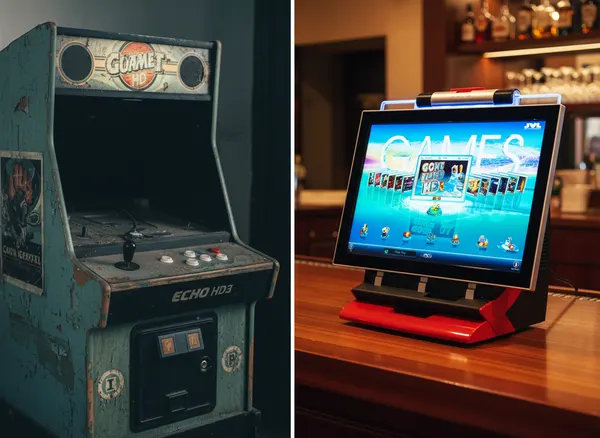
Games with the best profit margins are low-maintenance classics and digitally-based experiences requiring minimal ongoing costs. Pinball machines and vintage arcade cabinets generate consistent $100-$200 monthly with minimal upkeep beyond occasional repairs. Digital games on modern platforms eliminate parts replacement while offering easy content updates. Simple mechanical games like air hockey maintain profitability through durability and low operating costs.
Profit margin differs from absolute revenue. High-earning redemption games generate more gross revenue but incur continuous prize costs and mechanical maintenance. Lower-revenue classics with minimal operating costs can achieve superior net margins.
Profit margin comparison by type:
Classic video cabinets: 70-80% margin after minimal maintenance
Digital multi-game systems: 75-85% margin, software-only updates
Air hockey and table games: 60-70% margin, durable construction
Pinball machines: 50-60% margin, requires skilled maintenance
Redemption games: 40-50% margin after prize costs
VR experiences: 30-40% margin, high equipment and content costs
Smart operators balance high-revenue games with low-maintenance classics to optimize overall profitability. Home arcade machines provide the best personal margin calculation because unlimited play generates zero incremental costs after initial investment.
How do location and traffic affect arcade game earnings?
Location and traffic are the primary determinants of arcade game revenue, often creating 5-10x earnings differences between optimal and poor placements. High-traffic entertainment districts, shopping malls, and family venues generate $300-$500 monthly per machine, while secondary locations struggle to reach $100 monthly. Demographics matter equally because family-oriented locations support different game types than adult entertainment venues.
Successful placement requires matching game types to location demographics and traffic patterns. Fighting games perform well in urban barcades attracting competitive players. Redemption games thrive in suburban family centers. Racing and sports games succeed in locations with young male demographics.
Location impact factors:
Foot traffic volume: Direct correlation to earning potential
Demographic alignment: Age and income matching game types
Competition density: Multiple venues diluting audience
Visibility and accessibility: Game placement within venue
Dwell time expectations: Quick-service versus extended visits
Weekend versus weekday traffic patterns
Operators pay premium rents for prime locations specifically because traffic volume justifies the cost. A machine earning $500 monthly in an optimal spot might generate only $50 monthly in a poor location despite identical equipment quality and maintenance.
Frequently asked questions
Which arcade games make the most money per month?
Redemption and ticket-prize games consistently lead — typically generating $300–$600 monthly per unit in high-traffic venues. Classic video games average $100–$200 monthly. VR experiences can reach $400–$500 monthly in prime locations. The exact ranking depends heavily on venue type and customer demographics.
Why are redemption games more profitable than video games?
Redemption games (skee-ball, basketball, claw machines) attract players willing to spend repeatedly chasing tickets and prizes. The session length is short, the play cost per attempt is low, and the prize wall converts tickets back into venue revenue. Video games are often single-session, longer-play formats with lower turnover.
How much can a single arcade machine earn per day?
A well-placed machine generates $5–$30 per day in a typical commercial location. Top-performing machines in high-traffic bars or family entertainment centers can produce $50–$100+ per day. Underperformers may earn under $2 daily and should be replaced or relocated.
Does the type of game matter more than the location?
No. Location and foot traffic consistently outweigh game selection in determining revenue. A great machine in a low-traffic venue underperforms a mediocre machine in a high-traffic venue. Successful operators focus on location first, then optimize the machine mix for the customers that actually walk in.
What types of games should new arcade operators avoid?
Long-play games with single players (some racing simulators, complex strategy games) generate less revenue per hour than short-play, high-turnover games. Niche titles that appeal only to hardcore gamers also underperform — they attract a small group of dedicated players but limit broader walk-in revenue.