How much money can your arcade make?
A well-run arcade earns $50,000–$300,000 annually with 10–25% net margins. See what drives revenue and what to realistically expect.

Highlights
- A well-located arcade typically generates $50,000–$300,000 in annual gross revenue
- Net profit margins run 10–25% after accounting for rent, labor, and maintenance costs
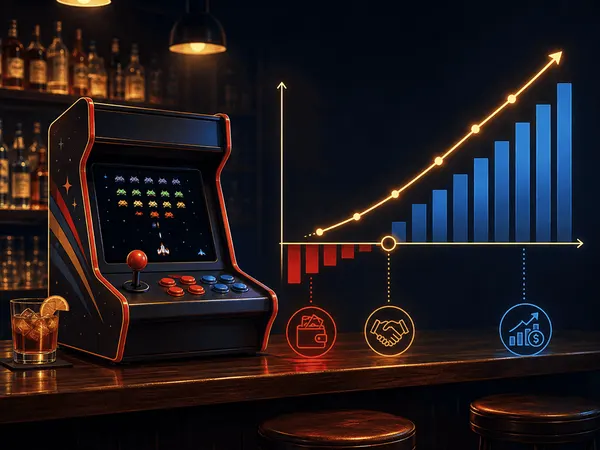
- Barcades significantly outperform traditional arcades: $15,000–$40,000/month vs. $3,000–$10,000/month
- Diversified revenue streams (food, beverages, events) are the strongest predictor of long-term profitability
A well-located arcade typically generates $50,000 to $300,000 annually in gross revenue, though profitability varies dramatically based on location, game mix, and operational efficiency. Small family entertainment centers average $8,000-$15,000 monthly, while successful urban barcades can exceed $40,000 monthly. However, high operational costs mean net profit margins typically range from 10-25% after rent, labor, and maintenance expenses.
Revenue potential depends heavily on business model and target audience. Traditional coin-operated arcades struggle in modern markets, while hybrid concepts combining food, beverages, and entertainment achieve stronger performance through diversified income streams.
Revenue factors by venue type:
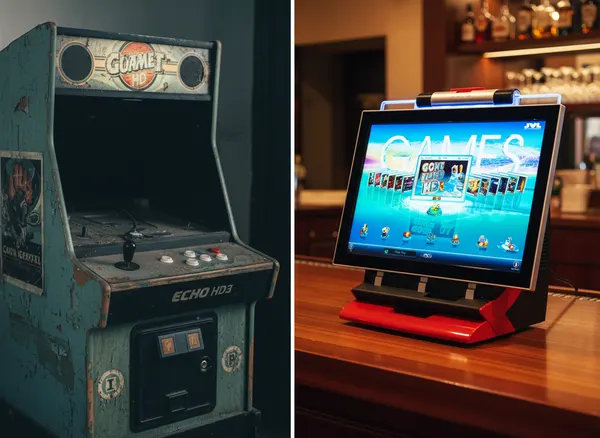
Traditional arcade: $3,000-$10,000 monthly, declining market
Barcade concept: $15,000-$40,000 monthly, alcohol-driven revenue
Family entertainment center: $20,000-$60,000 monthly, multiple attractions
Event venue with arcade: $10,000-$30,000 monthly, supplemental income
Corporate installation: Fixed rental income, no operational burden
Most successful operators generate 60-70% of revenue from food and beverage sales rather than gaming. The shift reflects market realities where arcade machines function as atmosphere creators rather than primary profit centers.
How much revenue does one arcade machine generate?
Individual arcade machines generate $50 to $400 monthly depending on game type, location traffic, and maintenance condition. Classic video games average $100-$200 monthly in moderate-traffic locations. Redemption games with ticket prizes can generate $300-$400 monthly in family venues. VR experiences and premium attractions command higher per-play prices, sometimes reaching $500+ monthly in optimal locations.
Revenue per machine varies seasonally and degrades as games age or novelty fades. New releases generate peak earnings for 3-6 months before declining. Strategic game rotation and maintenance directly impact profitability.
Monthly revenue by game category:
Classic arcade games: $50-$150 per machine
Fighting and racing games: $100-$250 per machine
Redemption and ticket games: $200-$400 per machine
Prize crane and skill games: $150-$300 per machine
VR and premium experiences: $300-$600 per machine
Photo booths and novelties: $200-$500 per machine
Operators need approximately $200-$300 monthly per machine to cover space allocation, electricity, maintenance, and profit expectations. Underperforming machines get replaced quickly. Home arcade machines eliminate revenue pressure, providing unlimited entertainment without operational cost concerns.
What affects arcade profitability the most?
Arcade profitability is most affected by location quality, operational efficiency, and game mix optimization. Prime locations in high-traffic entertainment districts can generate 3-5 times more revenue than secondary locations despite higher rent. Labor costs and maintenance efficiency determine whether gross revenue translates to profit. Game selection directly impacts customer retention and per-visit spending.
Successful operators master the balance between fixed costs and revenue generation. Even excellent locations fail with poor management, while skilled operators can maximize returns from moderate spaces through strategic game placement and customer experience optimization.
Critical profitability factors include:
Location foot traffic and demographic alignment
Rent as percentage of revenue (ideally under 15-20%)
Labor efficiency and scheduling optimization
Game maintenance response time and costs
Food and beverage margin contribution
Customer experience driving repeat visits
The difference between profitable and failing arcades often comes down to operational discipline rather than concept quality. Successful operators track revenue per square foot, adjust game mix based on performance data, and maintain equipment proactively rather than reactively.
Can arcade businesses be profitable today?
Modern arcade businesses can be profitable when repositioned as social entertainment venues rather than pure gaming destinations. Barcades combining craft beverages with nostalgic games achieve 15-30% profit margins in urban markets. Family entertainment centers offering diverse attractions beyond traditional arcades maintain profitability through multiple revenue streams. Traditional coin-operated game rooms struggle without adaptation to current consumer expectations.
Profitability requires acknowledging that arcades no longer compete on gaming technology. Home consoles and mobile games offer superior graphics and convenience. Successful modern arcades sell atmosphere, social experience, and activities unavailable at home.
Profitable modern arcade models:
Barcades: Alcohol sales subsidize game operations, 20-30% margins
FEC hybrids: Bowling, laser tag, dining with arcade component
Corporate event spaces: Premium pricing for private bookings
Nostalgic concept venues: Instagram-worthy spaces attracting younger demographics
Membership clubs: Subscription models with unlimited play
The market shift explains growing home arcade demand. Consumers recognize they can own commercial-quality equipment privately, eliminating venue visits while gaining permanent access. Premium systems deliver authentic arcade experiences without operational complexity or recurring costs.
Frequently asked questions
How much annual revenue does a typical arcade generate?
A well-located commercial arcade generates $50,000 to $300,000 in annual gross revenue. The range depends heavily on size, location, machine mix, and whether the venue includes food and beverage. Pure coin-op arcades sit on the low end; full family entertainment centers can exceed $1 million.
What profit margins are realistic for an arcade business?
Net profit margins typically run 10–25% after rent, labor, utilities, and maintenance. Higher margins (25–30%+) require optimized operations, strong food/beverage revenue, and lean overhead. Lower margins (under 10%) often signal location problems, undercapitalization, or excessive payroll.
Do barcades make more money than traditional arcades?
Significantly more. A typical barcade generates $15,000–$40,000 in monthly revenue versus $3,000–$10,000 for a traditional coin-op-only arcade. The food and beverage component routinely produces more revenue than the gaming itself, and the adult audience tolerates higher per-visit spending.
What are the biggest expenses for an arcade business?
In order: rent (15–30% of revenue), labor (20–35%), and equipment maintenance (10–15%). Inventory (food, drinks, prizes) adds another 25–35% if applicable. The remaining margin must cover utilities, insurance, marketing, and owner profit.
How can arcade owners increase revenue?
Diversifying revenue streams is the single most effective lever. Adding food and beverage, party bookings, league events, tournaments, and corporate buyouts can double or triple per-square-foot revenue versus a pure coin-op model. The arcades that earn the most are no longer just gaming venues.