Can I put modern games on an arcade cabinet?
Modern games run on DIY builds, but commercial machines use locked systems for licensing compliance. Here's what's possible and what to consider.

Highlights
- Original vintage cabinets use dedicated single-game hardware — no game additions or modifications are possible
- Custom DIY builds using PC or Raspberry Pi components can run modern games through software emulation
- Commercial arcade systems typically lock game libraries for licensing compliance and performance reliability
- Modifying a commercial machine voids the warranty and may violate copyright law
Putting modern games on arcade cabinets is possible with DIY builds but restricted on commercial systems. Custom-built cabinets using PC hardware, Raspberry Pi, or Android platforms can run contemporary games through emulation or native ports. However, manufactured arcade machines from established companies typically feature locked systems preventing unauthorized software installation to ensure licensing compliance and performance standards. Technical modifications void warranties and may violate copyright laws.
The capability depends entirely on cabinet architecture and ownership philosophy. Open platforms prioritize customization while commercial systems emphasize reliability and legal compliance.
Modern game compatibility by system type:
Custom DIY builds: Full flexibility for any compatible games
PC-based cabinets: Can run Steam games and modern titles
Raspberry Pi systems: Emulation-based, limited to older games
Commercial closed systems: No modern game additions allowed
Android-based units: Some allow sideloading with compatibility issues
JAMMA multi-boards: Limited to compatible classic arcade titles
Most consumers seeking modern gaming choose consoles or PCs rather than arcade cabinets. Arcade machines excel at delivering curated classic experiences with guaranteed compatibility rather than serving as platforms for contemporary titles requiring frequent updates and powerful hardware.
Why do manufacturers lock arcade game libraries?
Manufacturers lock arcade game libraries to ensure licensing compliance, maintain performance standards, and eliminate support issues. Game publishers require strict controls over distribution and usage rights. Locked systems allow manufacturers to negotiate proper licensing agreements and pay appropriate royalties for every included title. This protects both the company and customers from legal liability while guaranteeing that every game runs optimally without compatibility problems.
Open systems create legal gray areas around ROM distribution and copyright infringement. Manufacturers avoid these risks by controlling their game libraries completely.
Reasons for locked libraries:
Legal licensing compliance with game publishers
Performance optimization for included titles
Warranty protection and manufacturer support
Elimination of customer service issues from incompatible games
Quality control maintaining brand reputation
Prevention of piracy and unauthorized distribution
Simplified user experience requiring zero technical knowledge
The locked approach trades customization for reliability. Premium home arcade machines with curated libraries of 100-150 games provide sufficient variety without requiring technical modifications. The curation focuses on quality classics rather than endless mediocre titles.
What technical skills are needed to modify arcade cabinets?
Modifying arcade cabinets requires intermediate computer skills, basic electronics knowledge, and problem-solving ability. DIY builders must understand operating system installation, file management, emulator configuration, and troubleshooting. Hardware modifications need competence with wiring, soldering, and component installation. Successful projects demand 10-20 hours of research and setup time plus ongoing maintenance as software updates and compatibility issues emerge.
The learning curve discourages many potential modifiers. Online communities provide guides and support, but projects still require technical comfort and patience with trial-and-error processes.
Required technical capabilities:
Operating system installation: Linux, Windows, or Android setup
File management: ROM organization and directory structures
Emulator configuration: Controller mapping and performance tuning
Basic electronics: Wiring understanding and connection troubleshooting
Problem-solving: Debugging compatibility and performance issues
Research skills: Finding solutions in forums and documentation
Ongoing maintenance: Managing updates and resolving new issues
Time investment often exceeds expectations. A "simple" Raspberry Pi arcade build typically consumes 15-25 hours including research, assembly, configuration, and troubleshooting. Hardware issues, game compatibility problems, and emulator quirks extend timelines unpredictably. Many enthusiasts conclude that starting with complete systems eliminates frustration while delivering superior out-of-box experiences.
Do modern games work well on arcade controls?
Modern games generally do not work well on arcade controls because they're designed for gamepad or keyboard-mouse interfaces. Contemporary titles assume analog stick inputs, multiple shoulder buttons, and complex button combinations impossible on standard arcade panels. Fighting games and 2D platformers adapt reasonably, but most modern genres including FPS, RPG, and adventure games require control schemes beyond arcade cabinet capabilities.
The control mismatch explains why arcade cabinets focus on classic games designed specifically for arcade inputs. Trying to force modern games onto inappropriate controls creates frustration rather than enjoyment.
Control compatibility by game genre:
Classic arcade games: Perfect compatibility, designed for arcade controls
2D fighting games: Good compatibility, traditional arcade origins
2D platformers and run-and-gun: Reasonable compatibility
Racing games: Requires steering wheel setup, not standard controls
Puzzle games: Good compatibility with simple inputs
Modern 3D games: Poor compatibility, need analog controls
FPS and action-adventure: Very poor compatibility, wrong control scheme
The limitation reinforces why commercial arcade systems curate classic libraries. These games deliver optimal experiences with arcade controls. Attempting to play inappropriate modern titles creates compromised experiences inferior to playing those games on their intended platforms with proper controllers.
Frequently asked questions
Can you add modern games to a vintage arcade cabinet?
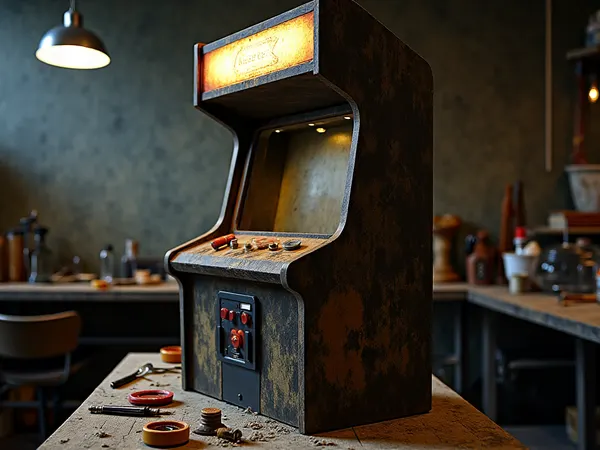
Generally, no. Original vintage cabinets were built around dedicated single-game hardware — the circuit boards, ROMs, and controls were custom-fit to one specific title. The architecture does not support adding or swapping games. Some cabinets allow board replacement with another single game from the same era, but not modern titles.
What about custom or DIY arcade cabinets?
DIY builds based on PC components or Raspberry Pi can run modern emulated games — MAME-based systems are the most popular approach. These projects offer significant flexibility but require technical knowledge, ongoing software maintenance, and operate in a legal gray area regarding game ROM ownership.
Why are commercial arcade machines locked to a fixed game library?
Licensing compliance, performance reliability, and customer support all require a closed library. Manufacturers license games for specific units; adding unauthorized games violates the license. Locked libraries also ensure every game has been tested and optimized for the hardware, reducing failures in commercial use.
Does modifying an arcade machine void the warranty?
Yes, almost universally. Any modification — adding games, swapping hardware, or installing aftermarket parts — voids the manufacturer warranty and may also violate copyright law if the games are not properly licensed. For commercial operators, this also exposes them to liability.
What is the best path if I want a wide game library at home?
A purpose-built modern arcade machine with a curated library — like the JVL ECHO HD3 with 149 pre-installed games — delivers far more reliable, legal, and supported playtime than a DIY or modified cabinet. Quality matters more than quantity: a well-curated 149-game library typically offers more replay value than 5,000 emulated titles where most are duplicates or unplayable.