Is arcade good passive income?
Arcades require active management and daily oversight — not passive income. Here's the honest reality of arcade ownership before you invest.

Highlights
- Arcades are not genuinely passive income — they require active, hands-on management to succeed
- Equipment malfunctions, customer service, game rotation, and marketing all demand ongoing owner attention
- Owners who expect hands-off income typically see poor financial performance or early business failure
- The machine automates transactions, but the business itself does not run without active oversight
Arcades do not provide good passive income and require active, hands-on management to succeed. The business demands regular equipment maintenance, customer service presence, game rotation, and operational oversight that makes truly passive ownership nearly impossible. Owners expecting hands-off income typically experience poor financial performance or business failure.
The passive income misconception stems from the appeal of automated entertainment. While arcade machines do generate revenue without direct transaction involvement, the supporting infrastructure requires constant attention. Equipment malfunctions, customer disputes, cleaning needs, and marketing efforts demand owner presence or expensive management staffing.
Active management requirements include:
Daily or weekly equipment checks and maintenance
Customer service during peak hours (evenings and weekends)
Regular game performance analysis and rotation decisions
Marketing and social media management
Vendor relationships and inventory management
Staff hiring, training, and scheduling
Financial realities make passive operation impractical. Hiring full-time managers to handle operational duties typically consumes 30% to 40% of revenue, eliminating most profit margins. Owners who attempt absentee management through part-time staff often face equipment neglect, poor customer experience, and declining revenue.
Passive income comparison:
Rental properties: Require occasional maintenance but allow monthly passive returns
Index funds: Truly passive with quarterly rebalancing only
Arcade ownership: Demands 20 to 40 hours weekly for successful operation
The business model works for semi-passive involvement where owners maintain strategic oversight while delegating specific tasks. This hybrid approach requires strong systems, reliable staff, and regular owner check-ins to maintain quality and profitability.
Market dynamics compound the active management need. Entertainment preferences shift rapidly, requiring owners to monitor trends, test new games, and refresh offerings regularly. Arcades that stagnate with unchanged game lineups typically see 20% to 40% revenue declines within 12 to 18 months.
How hands-on do you need to be with an arcade?
Arcade ownership requires significant hands-on involvement, typically 20 to 40 hours weekly for successful operations. Owners must be physically present during peak hours, perform or oversee equipment maintenance, manage customer service, and continuously optimize game performance through active monitoring and rotation.
The most critical hands-on periods occur during high-traffic times. Friday and Saturday evenings, weekend afternoons, and holiday periods demand owner presence to ensure smooth operations, handle customer issues, and maintain the atmosphere that drives repeat visits.
Daily and weekly tasks requiring hands-on attention:
Morning equipment checks: Testing game functionality before opening
Customer service: Resolving issues, providing assistance, creating welcoming atmosphere
Cash and card system management: Reconciling daily revenue, troubleshooting payment systems
Cleaning and maintenance: Keeping machines, screens, and facility presentable
Problem-solving: Addressing technical malfunctions as they occur
Technical maintenance represents unavoidable hands-on work. Arcade machines experience constant use and require regular cleaning, monitor adjustments, control repairs, and occasional component replacement. Owners who lack technical skills must either learn them quickly or budget $2,000 to $5,000 monthly for professional maintenance services.
Strategic management decisions demand personal involvement. Analyzing which games generate revenue, determining optimal placement, setting pricing, and deciding when to acquire new equipment require owner judgment based on direct observation and customer feedback.
Delegation possibilities and limitations:
Staff can handle basic operations like customer transactions, routine cleaning, and simple troubleshooting. However, strategic decisions, vendor negotiations, marketing creativity, and complex repairs typically require owner expertise. Attempting to fully delegate these functions often results in declining performance.
The hands-on requirement decreases somewhat after initial establishment. Once systems stabilize, reliable staff are trained, and equipment selection is optimized, owners may reduce involvement to 15 to 25 hours weekly. However, this reduced schedule still requires strategic oversight and occasional intensive periods during equipment updates or special events.
Location size affects hands-on demands. Small arcades with 15 to 25 machines can be managed part-time by owners with other income sources. Larger entertainment centers with 50+ machines require full-time owner commitment or expensive management infrastructure that eliminates passive income potential.
Can you run an arcade remotely or with staff only?
Running an arcade remotely with staff only rarely succeeds and typically results in declining revenue, poor customer experience, and equipment deterioration. While possible in theory, remote operation requires exceptional systems, highly reliable staff, and still demands regular owner oversight to maintain quality and profitability.
Challenges of remote arcade management:
Equipment maintenance neglect: Staff lack expertise or motivation for proactive repairs
Customer experience degradation: Absence of ownership presence reduces atmosphere quality
Revenue leakage: Inadequate oversight creates opportunities for cash handling issues
Strategic stagnation: Staff cannot make game rotation or pricing decisions effectively
Problem escalation: Minor issues become major crises without owner intervention
The cost structure makes remote operation financially impractical. Hiring a competent general manager requires $40,000 to $60,000 annually, plus benefits, consuming 25% to 35% of typical arcade revenue. Adding technical staff for maintenance increases labor costs to unsustainable levels for most operations.
Staff motivation differs fundamentally from ownership. Employees typically lack the emotional investment and financial incentive to optimize performance, troubleshoot creatively, or maintain the detailed attention that drives success. The entrepreneurial energy that makes arcades thrive cannot be easily replicated through payroll.
Semi-remote operation strategies:
Some owners achieve limited success with hybrid models combining remote monitoring technology and regular physical presence. This approach includes:
Installing security cameras for remote observation
Using cloud-based point-of-sale systems for real-time revenue tracking
Scheduling weekly owner visits for equipment inspection and staff management
Maintaining strong communication systems for staff to escalate issues
Even with these systems, truly successful arcades require owner presence during peak hours to maintain energy, resolve customer concerns, and observe patterns that inform strategic decisions.
Geographic constraints make remote operation particularly challenging. Owners living more than 30 minutes from their arcade struggle to respond quickly to equipment failures, staff emergencies, or operational issues that require immediate attention.
Realistic expectations for absentee ownership:
Arcade owners attempting remote operation should expect revenue performance 40% to 60% below comparable actively managed venues. The combination of slower problem resolution, reduced customer experience quality, and suboptimal game selection typically makes remote operation unprofitable after accounting for management labor costs.
Individuals seeking passive income should consider alternative investments. Arcades fundamentally require active engagement to generate acceptable returns, making them unsuitable for investors prioritizing hands-off income streams.
What makes an arcade require active management?
Arcades require active management due to constant equipment maintenance needs, rapidly changing entertainment preferences, customer service demands, and the technical complexity of maintaining multiple electronic gaming systems. Unlike truly passive investments, arcade success depends on continuous operational optimization and personal oversight.
The equipment-intensive nature creates unavoidable management demands. A typical 30-machine arcade operates with thousands of moving parts, electronic components, and mechanical systems that wear down through continuous use. Joysticks loosen, buttons stick, monitors dim, and card readers malfunction, requiring prompt attention to maintain revenue flow.
Technical factors requiring active management:
Hardware failures: Average arcade experiences 2 to 5 machine malfunctions weekly
Preventive maintenance: Regular cleaning and adjustment prevent larger failures
Software updates: Modern connected games require periodic updates
Diagnostic expertise: Identifying and resolving technical issues quickly
Customer experience quality demands personal attention. Arcade atmospheres depend on cleanliness, lighting, sound levels, and interpersonal warmth that staff alone cannot consistently maintain. Owners who create memorable experiences through personal interaction build loyalty that drives repeat visits and word-of-mouth marketing.
Revenue optimization requires continuous analysis. Successful owners monitor per-machine earnings weekly, identifying underperformers for replacement or relocation. This data-driven approach demands owner involvement because strategic equipment decisions require understanding customer preferences, market trends, and return-on-investment calculations.
Operational complexity factors:
Game mix optimization: Rotating equipment based on performance data
Pricing strategy: Adjusting credit packages and play costs for maximum revenue
Event coordination: Planning parties, tournaments, and special promotions
Vendor management: Negotiating equipment purchases, repairs, and prize supplies
Marketing execution: Creating social media content, email campaigns, and local partnerships
The entertainment industry's dynamic nature prevents set-it-and-forget-it operation. Customer preferences shift as new gaming trends emerge, popular culture changes, and competing entertainment options evolve. Arcades using the same game lineup for 18+ months typically experience significant revenue decline.
Seasonal fluctuations require adaptive management. Summer and holiday periods demand different strategies than school-year operation. Active owners adjust hours, staffing, marketing focus, and special events to match seasonal patterns, maximizing revenue during peak periods while controlling costs during slower months.
The business combines retail operations, technical maintenance, and entertainment production, each requiring specific expertise and attention. This complexity makes arcade ownership fundamentally incompatible with passive income expectations, positioning it instead as an active small business requiring entrepreneurial engagement.
Are there any passive elements to arcade income?
Arcade income does contain some semi-passive elements, though they represent a minority of overall revenue and still require foundational active management. Once games are properly maintained and positioned, individual play sessions generate revenue without direct owner transaction involvement, creating brief periods of automatic income flow.
Limited passive income characteristics:
Automated transactions: Games accept payment and deliver entertainment without owner involvement per transaction
Concurrent revenue generation: Multiple machines earn simultaneously while owner performs other tasks
Off-peak independence: Slow periods allow owner absence if reliable staff present
Established customer patterns: Regular visitors return without active marketing once loyalty is built
The passive elements function only when active management foundations are solid. Well-maintained equipment in optimal positions generates steady revenue during owner absences, but this automation depends entirely on the preceding active work of equipment selection, maintenance, and placement strategy.
Revenue predictability increases over time. Established arcades with loyal customer bases achieve more consistent income patterns, allowing owners to forecast earnings and plan strategic initiatives. This predictability creates a sense of passive flow but still requires ongoing maintenance to sustain.
Semi-passive revenue enhancement strategies:
Successful owners implement systems that reduce active management intensity while maintaining performance:
Preventive maintenance schedules: Systematic upkeep reduces emergency repairs
Training investment: Well-trained staff handle routine operations independently
Remote monitoring technology: Cloud-based systems track revenue and alert to issues
Streamlined vendor relationships: Established partnerships simplify ordering and repairs
Home entertainment evolution affects passive income potential. The availability of premium home arcade systems means commercial arcades must offer experiences justifying the trip. This competitive pressure requires continuous active management to maintain differentiation through superior variety, social atmosphere, and unique attractions.
Comparison to other semi-passive businesses:
Arcades offer more passive elements than restaurants or retail stores requiring constant inventory management but far less passivity than rental properties or dividend-generating investments. The business suits individuals seeking active engagement with periodic autonomy rather than true hands-off income.
The realistic model positions arcade ownership as an active business with operational leverage. Owners actively manage strategy, systems, and key decisions while delegating routine tasks to staff or automated systems. This approach allows 40% to 60% of time spent on strategic oversight rather than tactical execution, creating work-life balance without achieving true passivity.
Prospective owners should evaluate whether they genuinely enjoy the entertainment business and customer interaction. Those seeking purely financial returns without operational involvement will find disappointment, while individuals who value the lifestyle alongside income discover arcade ownership offers a rewarding blend of entrepreneurship and semi-autonomous revenue generation.
The passive income question ultimately reflects priority assessment. Arcades work excellently for hands-on entrepreneurs seeking community connection, creative satisfaction, and tangible business ownership. They perform poorly for investors seeking passive entertainment investments requiring minimal attention while generating consistent returns.
Frequently asked questions
Is owning an arcade really passive income?
No. Arcade ownership is often marketed as passive income, but the reality requires active, hands-on management. Equipment malfunctions, customer service, game rotation, marketing, and financial oversight all demand ongoing attention. Operators who expect truly hands-off income typically see poor performance or early failure.
How much time does an arcade business actually require?
20–40 hours per week for a single-location operation, even with employees handling the storefront. Owners spend time on maintenance scheduling, equipment troubleshooting, vendor relationships, marketing, financial management, and customer issues. Multi-location operators scale this proportionally with each new venue.
Can you hire a manager and make arcade ownership passive?
Partially. A strong general manager can take over day-to-day operations, but the owner still needs to handle strategic decisions, financial oversight, and major issues. Pure absentee ownership rarely works in arcade businesses — the operating margins are too thin to absorb significant management overhead without active involvement.
What is the closest thing to passive arcade income?
Revenue-share placements with established operators. If you have capital and don't want to run the business yourself, partnering with an experienced arcade operator who places your machines in venues they manage produces semi-passive returns — typically 30–50% of machine revenue with no operational involvement. Returns are lower than running it yourself but require minimal active management.
Is there any version of arcade ownership that is truly passive?
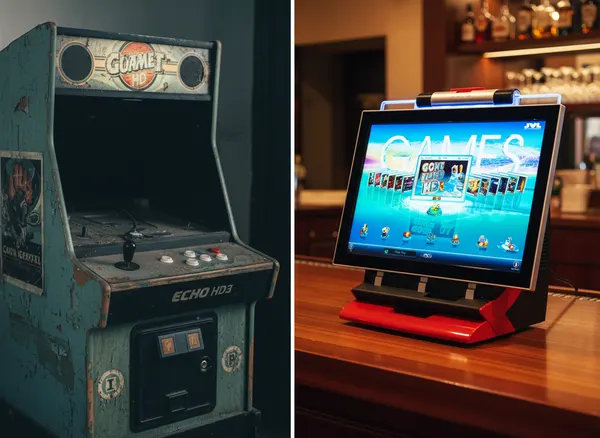
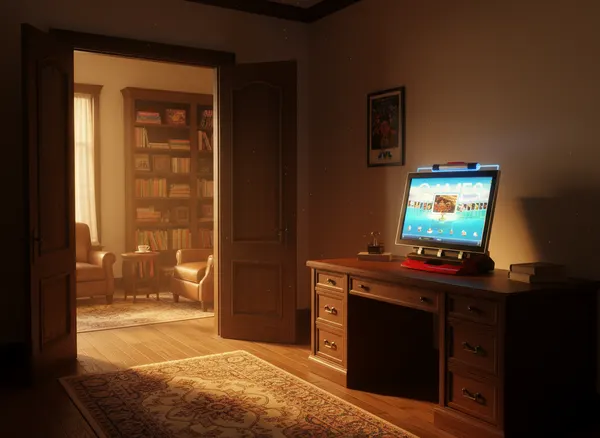
Home arcade ownership for personal enjoyment, not as a business. A premium home machine like the JVL ECHO HD3 produces 'returns' in the form of family entertainment and avoided venue costs, with zero operational overhead. As a business, however, arcades are not passive.