Is an arcade business profitable?
Arcade businesses can earn 15–30% margins and up to $300,000 annually when managed well. Learn what determines whether your arcade will succeed.

Highlights
- Well-managed arcades achieve 15–30% profit margins on $50,000–$300,000 in annual revenue
- Location quality and foot traffic are the single biggest variables in whether an arcade turns a profit
- Newer redemption games and racing simulators outperform classic cabinets in revenue per square foot
- Diversified income streams such as party bookings and food service significantly improve overall margins
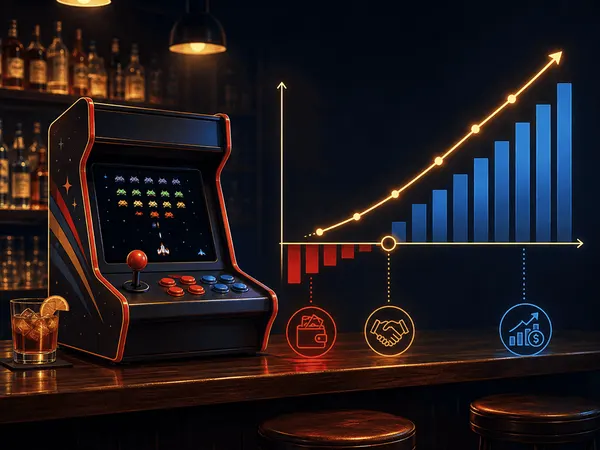
An arcade business can be profitable with the right location, equipment mix, and operational efficiency. Profit margins typically range from 15% to 30% for well-managed arcades, with annual revenues between $50,000 and $300,000 depending on size and market.
Profitability depends heavily on location quality and foot traffic. High-traffic areas near entertainment districts, shopping centers, or family destinations generate consistent customer flow. The equipment selection matters significantly, with newer redemption games and racing simulators often producing higher revenue per square foot than classic cabinets.
Key profitability factors include:
Initial investment ranging from $50,000 to $250,000
Monthly operating costs including rent, utilities, and maintenance
Revenue per machine averaging $200 to $400 monthly for popular units
Diversified income streams such as party bookings and food service
Successful arcade operators focus on creating experiences rather than just providing games. Venues that combine modern attractions with nostalgic elements, offer birthday party packages, and maintain equipment reliability tend to outperform game-only locations.
The business model works best when operators actively manage their floor. This includes rotating underperforming machines, adjusting pricing based on demand, and investing in regular maintenance to minimize downtime. Location demographics play a crucial role, with family-oriented suburbs and college towns typically providing stronger customer bases than isolated rural areas.
What is the average profit margin for an arcade?
The average profit margin for an arcade operation ranges between 15% and 25%, with exceptional locations achieving margins up to 30% or higher. These margins reflect net profit after covering all operating expenses including rent, utilities, staffing, maintenance, and equipment costs.
Profit margins vary significantly based on operational efficiency and revenue diversification. Arcades that generate additional income through party hosting, food and beverage sales, or redemption prizes typically achieve higher margins than game-only venues.
Factors affecting margins:
Rent costs consume 15% to 25% of revenue in most locations
Utilities and maintenance add another 10% to 15%
Staffing expenses range from 20% to 30% of revenue
Equipment depreciation impacts long-term profitability
Well-managed arcades maintain margins by optimizing their game mix. High-earning redemption games and racing simulators generate $300 to $500 monthly per unit, while classic cabinets may produce only $100 to $200. Strategic placement of high-margin vending and prize sales can add 5% to 10% to overall margins.
Location density affects margins substantially. Urban venues with high rent but strong traffic may show lower percentage margins while generating higher absolute profits. Suburban locations often balance moderate rent with steady family traffic, creating sustainable margin structures.
How much can you make owning an arcade?
Arcade owners can earn between $30,000 and $150,000 annually, depending on venue size, location quality, and operational efficiency. Larger entertainment centers with 50 to 100 machines in prime locations may generate $200,000 or more in owner income.
Revenue generation starts with understanding per-machine economics. A typical arcade with 20 to 30 machines generates $50,000 to $150,000 in annual revenue, with the owner retaining 15% to 25% as net profit after all expenses.
Income potential by venue type:
Small arcade (15 to 25 machines): $30,000 to $60,000 annually
Medium arcade (30 to 50 machines): $60,000 to $120,000 annually
Large entertainment center (50+ machines): $120,000 to $200,000+ annually
The timeline to profitability matters significantly. Most arcade businesses require 18 to 36 months to recover initial investment and reach sustainable profitability. Owners who actively manage operations, maintain equipment, and adapt their game mix typically reach profitability faster than absentee owners.
Additional revenue streams substantially impact owner earnings. Birthday party packages, corporate events, and league tournaments can add 20% to 40% to base game revenue. Food and beverage sales, when properly managed, contribute high-margin income that directly improves owner compensation.
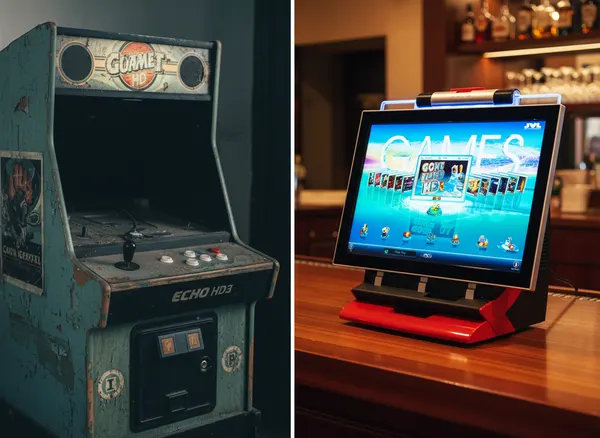
Market dynamics affect earning potential considerably. College towns and family-oriented suburbs provide more consistent year-round traffic than seasonal tourist locations. Owners in competitive markets must differentiate through experience quality, equipment variety, or unique attractions like premium home arcade machines that appeal to nostalgic adults.
What are the startup costs for opening an arcade?
Startup costs for opening an arcade typically range from $50,000 to $250,000, depending on venue size, location, and equipment selection. A small arcade with 15 to 20 machines requires $50,000 to $100,000, while larger entertainment centers may need $150,000 to $250,000 or more.
Major cost categories include:
Arcade machines: $2,000 to $8,000 per unit for new equipment
Lease deposits and buildout: $10,000 to $40,000 depending on space condition
Lighting, flooring, and décor: $5,000 to $20,000
Point-of-sale systems and security: $3,000 to $8,000
Initial inventory (prizes, change, supplies): $2,000 to $5,000
Equipment selection dramatically impacts startup investment. Used or refurbished machines cost $1,000 to $3,000 each, allowing budget-conscious operators to start smaller. New premium machines, including racing simulators and redemption games, range from $5,000 to $15,000 per unit but typically generate higher revenue.
Location buildout varies widely based on existing infrastructure. Move-in ready retail spaces require minimal investment, while raw commercial spaces may need $20,000 to $50,000 in improvements including electrical upgrades, HVAC modifications, and ADA compliance work.
Hidden costs often surprise new operators:
Business licensing and permits: $1,000 to $5,000
Insurance (liability and property): $3,000 to $8,000 annually
Initial marketing and grand opening: $3,000 to $10,000
Working capital for first 3 to 6 months: $10,000 to $30,000
Financing options affect startup feasibility. Many operators use equipment financing for machines, reducing upfront cash requirements. SBA loans provide favorable terms for qualified borrowers, while some choose to start with a smaller footprint and expand as revenue grows.
The equipment mix should match target demographics. Family-focused arcades prioritize redemption games and racing simulators, while premium touchscreen arcade machines appeal to adult customers seeking nostalgic entertainment experiences. Strategic equipment selection maximizes revenue potential from day one.
How long does it take for an arcade to become profitable?
Most arcade businesses become profitable within 18 to 36 months of opening, with some well-positioned venues achieving profitability in 12 to 18 months. The timeline depends heavily on initial investment size, location quality, and operational efficiency.
Profitability timeline factors:
Revenue ramp-up period: 3 to 6 months to establish customer base
Break-even point: typically reached at 60% to 75% of capacity utilization
Full investment recovery: 24 to 48 months for most operations
The first six months involve building awareness and establishing operational rhythm. Revenue typically starts at 40% to 60% of potential capacity, gradually increasing as word-of-mouth spreads and marketing efforts gain traction. Seasonal factors affect this timeline, with summer and holiday periods generating stronger initial revenue.
Cash flow versus profitability represents an important distinction. Many arcades achieve positive monthly cash flow within 6 to 12 months, covering operating expenses and debt service. True profitability, including full cost recovery and owner compensation, takes longer as the business absorbs depreciation and pays down initial investment.
Accelerating profitability requires active management. Operators who monitor per-machine performance, rotate underperforming games, and optimize pricing typically reach profitability 6 to 12 months faster than passive owners. Creating multiple revenue streams through parties, events, and concessions shortens the path to sustainable profits.
Location selection affects timeline significantly. High-traffic urban locations with established foot traffic reach profitability faster than new suburban developments still building density. Venues near complementary entertainment options or within family-oriented communities typically see shorter profitability timelines.
Equipment quality impacts long-term profitability considerably. Investing in reliable, well-maintained machines reduces downtime and repair costs that can delay profitability. Some operators find success combining classic arcade experiences with modern premium options that attract diverse age groups and spending levels.
Frequently asked questions
How profitable are arcade businesses on average?
Well-managed arcades typically achieve 15–30% net profit margins on $50,000–$300,000 in annual revenue. The wide range reflects how much location and operating discipline matter. Underperforming arcades can run negative margins; top-performing ones (especially barcades) can exceed 30%.
What is the single biggest factor in arcade profitability?
Location and foot traffic. A great location with mediocre operations consistently outperforms a great operation in a poor location. Operators rate location as 60–70% of overall success in surveys, and the financial data supports that ranking.
Which arcade segments are most profitable?
Barcades (arcades serving alcohol) consistently outperform pure coin-op arcades. Family entertainment centers (FECs) with food and party packages also produce strong margins. The common theme: diversified revenue beyond pure gaming.
How do successful arcade owners improve profit margins?
Adding revenue streams (food, beverages, events), optimizing the machine mix (more redemption games, fewer slow-turnover video titles), hosting tournaments and league play, and tightly managing maintenance costs. Top operators routinely review which machines are underperforming and rotate or replace them.
Is an arcade more profitable than a typical small retail business?
Often, yes — when run well. Successful arcades with food and beverage revenue can produce higher margins than typical small retail (which averages 5–10% net margins). The tradeoff is higher operating intensity, longer hours, and weekend-heavy operations. The economics reward active management.