Bartop Arcade Machine for Home: Buying Guide 2026
Licensed minis, custom builds, multi-game boards, kits, DIY and touchscreen bartops: what each kind of bartop arcade machine is, what to check before you buy, and what it costs in 2026.

Highlights
- Bartop covers six purchases: licensed minis, custom builds, multi-game boards, kits, DIY and touchscreen bartops
- Where the games come from matters more than the count: licensed, in-house, emulated or bought from an online store
- Measure first: a 36-inch counter and a 42-inch bar play differently, and most bartops use a counter's full depth
- Prices run from about $130 for a small licensed Countercade to about $4,000 for a new touchscreen bartop
A bartop arcade machine is the top half of an arcade cabinet: screen, controls and speakers in a box that stands on a bar, counter or table instead of the floor. In 2026 the word covers a wide range of machines from about $130 to about $4,000, and what sits inside the box varies even more than the price. You can find:
- a bartop that runs a handful of licensed classics
- another with thousands of unlicensed emulated games
- a third with a Raspberry Pi its owner wired up at the weekend
- a fourth with a touchscreen library written for cards, puzzles and trivia
The issue is that you tend to get what you pay for, so while saving a buck may result in a quick fix, for a long-term entertainment solution, it's best to know where to go and what to buy.
This guide:
- sorts those machines into the six kinds on sale today
- goes through what to check before you buy
- sets out real 2026 prices
- ends with a rule for matching the machine to the people who will play it
What counts as a bartop arcade machine
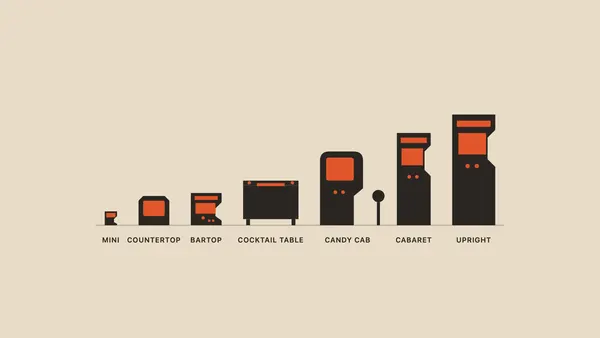
Take a full-size upright arcade game, cut it off below the control panel and stand the rest on a counter: that is a bartop. It keeps the screen, the marquee and the controls, usually a joystick and buttons for one or two players, and loses the legs.
- Payment: they may or may not have a coin slot/payment device, depending on the intended market.
- Full-size bartops in this guide stand about 21 to 26 inches tall with 19- to 22-inch screens.
- Licensed minis are much smaller, with 7- or 8-inch screens.
- Against a full-size cabinet at home: an original upright stands 5 to 6 feet tall and weighs around 250 pounds, while a bartop uses a counter you already have.
Two neighbouring words cause most of the confusion in listings:
- Countertop is used almost interchangeably with bartop: the same product is often sold under both names. It is the older coin-op word and usually means a touchscreen model, like the ones that sat on bar counters in the 1990s and 2000s, though some have a joystick and buttons as well.
- Tabletop usually means a cocktail table with the screen facing up, though retailers also use it for any small machine that sits on a table.
The six kinds of bartop on sale in 2026
The six kinds look alike on a counter. What separates them is inside: who made the games, how the cabinet was built and who fixes it.
| Type | Key characteristics | Main trade-off | Best for |
|---|---|---|---|
| Licensed retro bartops | A few licensed classics, a small screen, works out of the box | Fixed library; cabinets built to a price | A retro fan on a budget who wants a few specific classics |
| Prebuilt bartops from small makers | Shipped assembled, with full-size arcade controls and a 19- to 22-inch screen | Game library and warranty vary by maker | A player who wants a big library and real arcade controls |
| Generic "Pandora's Box" bartops | Mass-produced multi-game board, generic sticks, thousands of games advertised | Padded game lists, unstated licensing, variable build | A low-cost route to a big game count, if you check reviews of the exact listing |
| Kits and shells | A cabinet without the electronics; you add the computer, screen and controls | Extra parts to budget for, plus an evening or two of assembly | Someone who wants a cleaner cabinet than they could cut, and their own choice of what goes inside |
| DIY builds from plans | A home-built box with a Raspberry Pi running RetroPie; the cheapest route | Only as good as your woodwork and wiring, with nobody to call | Someone who enjoys the build as much as the games |
| Touchscreen bartops | No joystick: cards, puzzles and trivia played by tapping, in short turns | Used ones have no manufacturer behind them; a new one costs the most | A household where most players are guests, family and friends of all ages |
Licensed retro bartops
These are the bartops sold by big retailers: a small cabinet with a few classics the maker has paid to license, printed on the side art. As listed in September 2026, before any sale:
- Arcade1Up Countercade: a 7-inch screen and a few games each, $129.99 to $179.99; the 8-inch Counter Series lists at $249.99. The toy company Basic Fun! bought select assets of the brand in December 2025.
- Evercade Alpha: an 8-inch screen, six built-in Capcom games and a cartridge slot for hundreds more licensed titles, $249.
- SNK MVSX by Unico: a 17-inch 4:3 screen, two sets of controls and 50 licensed Neo Geo games, $499 on its own. An optional base turns it into a floor-standing cabinet.
What you get is the real, licensed versions of the games and a machine that works out of the box. What you give up is range: the library is fixed or grows only as fast as the maker releases it, the screens are small, and the cabinets are built to a price.
Prebuilt bartops from small makers
A layer of small workshops builds bartops to order and ships them assembled, usually with full-size arcade controls, a 19- to 22-inch screen and a Raspberry Pi or small PC inside. Three US examples as listed in September 2026:
- Gameroom Solutions Bartop Deluxe Plug and Play: a 22-inch monitor and more than 7,000 games, $999.99 (on sale at $799.99).
- Monster Arcades 2 Player Bartop: ¾-inch birch laminate rather than MDF, a 21.5-inch screen, $1,099 with a Raspberry Pi or $1,399 with a Windows PC.
- Creative Arcades 2P Mini: Sanwa joysticks, a multi-game board and a three-year parts-and-labor warranty, from $1,499.
The controls and finish are usually a clear step above the big-box machines, and many makers will customise the art. Before you order, ask two things:
- What games it ships with. Some makers load a multi-game board with thousands of games; others, Monster Arcades among them, include no games and leave the owner to load them.
- What the warranty covers. It ranges from unstated to three years.
Generic "Pandora's Box" bartops
Search a marketplace for a bartop and many results advertise thousands of games in one machine. Most are built around mass-produced multi-game boards sold under the Pandora's Box name and many others, fitted with generic sticks and buttons. One seller's guide puts a bare board at $60 to $120 and a finished cabinet at $400 to $800.
The count is the pitch and the weakness:
- Padded lists. Retailers that sell these boards say the lists include duplicates, several regional versions of the same game and titles that do not run well.
- Limited hardware. Entry-level boards handle only 2D games from the 1980s and 1990s.
- Unstated licensing. Sellers generally do not say the games are licensed, so ask what the machine ships with and on what basis. Most of the time they are not licensing these, which can also result in subpar emulation.
- Variable build. Quality differs from seller to seller, so reviews of the exact listing matter more than the brand name on it.
Kits and shells
A kit is a cabinet without the electronics. Two examples as listed in September 2026:
- Gameroom Solutions Bartop Arcade Kit Deluxe, $269.99: melamine panels with cam-lock fittings and the edge trim already applied. Controls ($59.99 with generic sticks, $89.99 with Sanwa parts), a 22-inch monitor ($129.99) and printed art are optional extras.
- LEP1 Customs flat-pack MDF kits, about $143 to $242 for two players: sizes for 15- to 32-inch screens, with no screen, controls, computer, speakers or paint included.
The buyer adds the rest: a computer, usually a Raspberry Pi or a small PC, the screen and controls if they are not bundled, speakers and the software. A kit suits someone who wants a cleaner cabinet than they could cut themselves but still wants to choose what goes inside. Budget for everything the kit leaves out, and for an evening or two of assembly and wiring.
DIY builds from plans
The cheapest route is building from scratch: an MDF or plywood box cut from free plans, a monitor, sticks and buttons, and a Raspberry Pi running RetroPie, the free emulation software. A 2026 build guide puts a budget version at about $350 in parts, and $550 to $730 with a mini PC and Sanwa controls. RetroPie itself ships with no games; its documentation explains that game files are copyrighted and are not included, so owners supply their own.
“A DIY bartop is a project, not a purchase.”
The finished machine is only as good as the builder's woodwork, wiring and patience with configuration, and there is nobody to call when something stops working. For the right person that is the whole point.
Touchscreen bartops
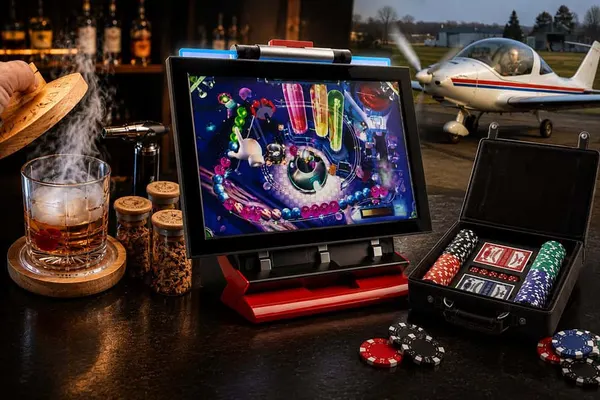
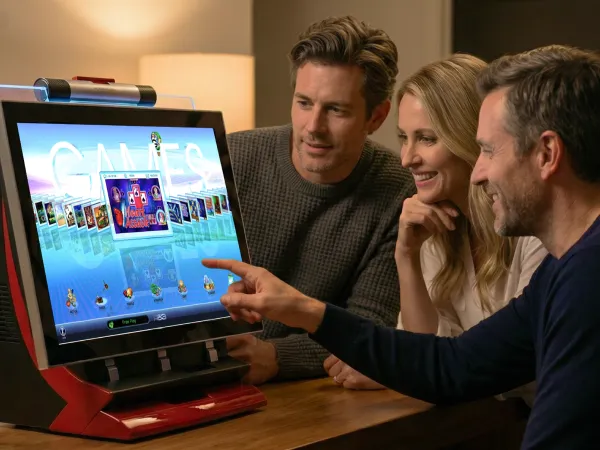
The sixth kind has no joystick at all. A touchscreen bartop, also sold as a countertop, is built for games you play by tapping: cards, puzzles, trivia, word games, mahjong and bar-sports classics, taken in short turns by two or three people. It is the bartop for a room where most of the players are guests rather than gamers. The comparison of touchscreen and traditional arcade machines goes through that choice in detail.
For a home there are two realistic routes in 2026:
- Used Megatouch: the bar-counter standard of the 1990s and 2000s, listed on eBay at about $300 to $2,700, with most working LCD models at $650 to $2,100. Production stopped in January 2014, so there is no manufacturer behind them; the history of Megatouch covers what to check on a used one.
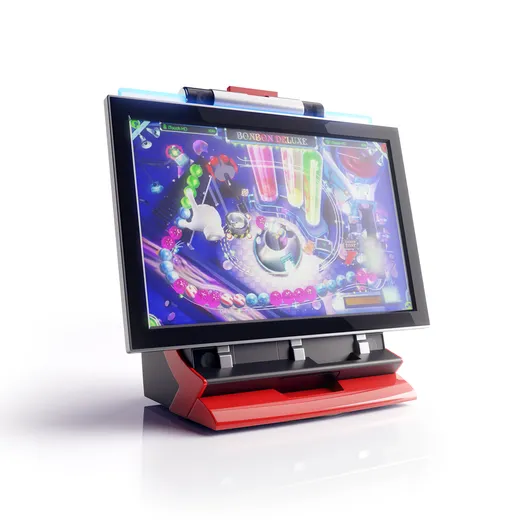
- New JVL ECHO HD3: the current model of a bartop line JVL has built since 1995, with a 22-inch HD touchscreen, 149 built-in games that are JVL's own and a 360-degree swivel base so players on either side can take their turn. It measures 15 × 19.5 × 18.5 inches and weighs 39.4 pounds; the Home Edition is a free-play machine and lists at $3,790.
What to check before you buy
Seven things separate a bartop you will keep from one you will sell a year later, starting with the one listings mention least.
Where the games come from
This matters more than any other line on the spec sheet, because it decides what you can play, whether the library can grow, and whether it can disappear. There are four sources:
- Licensed classics. The maker pays for each title, so the list is short and fixed, but the games are the real versions and will not change.
- In-house games. The maker writes its own library, as Megatouch did and JVL does. The games are built for the machine's controls and belong to the maker. This also offers an experience that you can't find on other devices, kind of like a game console.
- Emulation. Software that imitates original arcade hardware, loaded with copies of the original games. This is how a bartop gets to "thousands of games". Ask the seller what the machine comes with and on what basis and whether they licensed them. Those who haven't usually won't stick around very long.
- Cartridges and online stores. The library grows by purchase. A store-based library depends on the company that runs it: iiRcade owners lost access to their purchases when the company went bankrupt and shut its servers in June 2023, and in June 2026 AtGames and Zen Studios told buyers of Zen Studios content on the AtGames platform that they keep it "for as long as AtGames maintains its servers and platform services."
Then look past the headline count. A machine with 60 games you will actually play beats one with 6,000 you will scroll past, and a family that plays cards and trivia needs a different library from a player who wants shooters.
Controls
On a joystick bartop, the stick and buttons are what your hands touch every time, and they are where cheap machines save money. What to look at:
- Parts brand. Japanese parts from Sanwa and Seimitsu use smaller springs and feel quick; American-style parts from Happ and IL use larger, stronger springs and are built for durability. Most budget machines use unbranded copies of either.
- Upgrade cost. Good parts are cheap on their own: a Sanwa button lists at about $3 and a Sanwa joystick at about $25. A machine with generic controls can be upgraded later if the cabinet is worth keeping.
- Buttons per player. Fighting games want six.
- Room for two. Kitchen designers allow about 24 inches of counter width per person, so a two-player machine wants roughly four feet of counter.
- Screen type, on a touchscreen bartop. Projected-capacitive glass, the kind used in phones, has no layers that move when pressed; a resistive screen uses a flexible film that wears and needs recalibrating.
Screen size and shape
Original arcade games were made for 4:3 screens, and many shooters for a screen turned on its side. What that means when you compare machines:
- 4:3 or 5:4 panels suit classic games. On a 16:9 screen a 4:3 game is shrunk into the middle with black bars down both sides, and a vertical game fills only a narrow strip at the centre, which is why retro bartops such as the MVSX and the Evercade Alpha use 4:3 and some custom builders use 5:4 as a compromise.
- 16:9 panels suit machines built for modern or touch games.
- 19 to 22 inches is comfortable for two people standing or on stools; a 7- or 8-inch screen is a machine for one player close up.
Size, weight and where it will sit
Measure before you shop. The numbers that matter:
- Height. A standard kitchen counter is 36 inches high and a bar about 42. There is no standard height for arcade controls; a common builders' rule of thumb puts them between belly-button and elbow height for standing play, and one maker suggests about 42 inches from the floor. A bartop's control panel sits several inches above its surface, so on a kitchen counter the controls land near that standing height, while on a bar they are better played from a stool.
- Depth. A standard counter is 25 inches deep and most full-size joystick bartops are 19 to 23 inches, so check there is room behind for the cable and that the control panel can sit at the front edge.
- Weight. From about 8 pounds for a Countercade to about 75 for a birch bartop with a 21.5-inch screen, which matters if the machine will move between rooms or be lifted onto a high bar. The ECHO HD3 weighs 39.4 pounds and turns on its swivel base rather than being carried when the next player sits down.
- A floor base. Many makers sell one that turns their bartop into a standing machine later.
Build and finish
A bartop on a home bar is always in view, so the cabinet is part of the room. What each kind is usually made of:
- Big-box machines: printed MDF or plastic.
- Kits: MDF or melamine.
- Some small makers: plywood or birch laminate with vinyl art and T-molding edges.
- Commercial machines: cabinets designed for years of daily use in venues.
Look at the corners, the edge trim and how the control panel is fixed. If the machine will be on display, see one in person or ask for photos of an actual unit rather than renders.
Setup, connection and power
Ask three questions:
- Does it arrive assembled or flat-packed?
- Does it need Wi-Fi, an account or updates to work? Machines with a built-in library that runs offline, such as the ECHO HD3, work in a basement or a cabin with no network. Machines whose store, leaderboards or updates run online depend on the company that runs the service.
- What does it plug into? Almost every bartop runs from a standard household outlet.
Warranty, support and parts
Check the warranty length, who actually does the repair, and whether parts will exist in five years. How the options compare:
- Used Megatouch: no manufacturer behind it, so any warranty comes from the seller.
- DIY build: no warranty at all.
- Small maker: from unstated to three years, and only as good as the workshop.
- New touchscreen bartop: the warranty matters most here, because a screen repair is a panel job rather than a three-dollar part. The ECHO HD3 carries a one-year all-inclusive manufacturer warranty, and each unit is powered on and tested individually before it ships: assembly takes hours, while the full cycle to a unit ready to ship can run up to seven working days of configuration, testing, burn-in, a second quality check and packing.
What a bartop costs in 2026
These are list prices as makers showed them in September 2026. They do not include sales or promotions, and they change often.
| Kind | Examples | Typical price |
|---|---|---|
| Licensed retro bartop | Arcade1Up Countercade and Counter Series, Evercade Alpha, SNK MVSX | $130 to $250; the MVSX $499 and up |
| Generic multi-game bartop | "Pandora's Box" style listings | About $400 to $800 |
| Prebuilt from a small maker | Gameroom Solutions, Monster Arcades, Creative Arcades | About $800 to $1,800 |
| Kit or shell | Gameroom Solutions, LEP1 Customs | $143 to $270, plus screen, computer and parts |
| DIY from plans | Raspberry Pi and RetroPie in a home-built cabinet | About $350 in parts; $550 to $730 with a mini PC |
| Used touchscreen bartop | Megatouch Force, ION, Aurora | About $300 to $2,700 |
| New touchscreen bartop | JVL ECHO HD3, Home Edition | $3,790 list |
Prices are as makers and sellers listed them in September 2026 and change often.
Which bartop fits which buyer
- A retro fan on a budget who wants a few specific classics: a licensed retro bartop. Check that the games you want are on the list, because it will not grow.
- A player who wants a big library and real arcade controls: a prebuilt bartop from a small maker, after asking what the library consists of and what the warranty covers.
- Someone who enjoys the build as much as the games: a kit, or a DIY bartop from plans.
- A household where most players are guests, family and friends of all ages: a touchscreen bartop, used if you are comfortable servicing it, new if you want a warranty.
- A gift for someone who will not tinker: something that arrives assembled and works without setup, from a seller who answers the phone.
Whichever kind you choose, measure the counter, ask where the games come from, and find out who fixes it.
Frequently asked questions
What is the best bartop arcade machine for a home bar?
It depends on who will play. Licensed bartops suit a few classics on a budget, prebuilt custom machines suit a big library with arcade controls, and touchscreen bartops suit guests of mixed ages.
How big is a bartop arcade machine?
A full-size two-player bartop is about 22 inches wide, 21 to 26 inches tall and 19 to 23 inches deep, and weighs 35 to 75 pounds. Licensed minis with 7- or 8-inch screens are much smaller.
Is it cheaper to build a bartop arcade or buy one?
Usually cheaper to build: a budget Raspberry Pi bartop costs about $350 in parts, against $800 to $1,800 for a prebuilt one. Buying is the only route with a finished cabinet and a warranty.
What does "thousands of games in one" mean on a bartop?
It means a multi-game board running emulated copies of arcade games. The count includes duplicates and regional versions, and sellers generally do not say the games are licensed, so ask what the machine ships with.
Do bartop arcade machines need Wi-Fi or a computer?
Most need neither: the computer is built in, and many run offline, including the ECHO HD3. Machines with an online store or updates need Wi-Fi, and a kit or DIY build needs its own Raspberry Pi or PC.
Sources
11 sources- Wikipedia, Arcade cabinet (countertop and bartop cabinets)
- Arcade1Up, Countercades (prices as listed September 2026)
- Time Extension, Review: Evercade Alpha, November 2024
Show 8 moreShow less
- Unico, SNK MVSX
- Gameroom Solutions, Bartop Deluxe Arcade Cabinet Plug and Play
- Monster Arcades, 2 Player Bartop Arcade System
- Creative Arcades, 2P Mini 19" LCD
- Toy Book, Basic Fun! Acquires Select Assets of Arcade1Up, December 2025
- Arcade Heroes, Megatouch Ceases Development/Production Operations, 7 January 2014
- National Law Review, AtGames and Zen Studios Joint Statement, 15 June 2026
- Arcade Heroes, Newsbytes: iiRcade Bankruptcy, June 2023