Touchscreen Arcade vs. Traditional Arcade Machine: What's the Difference?
Comparison of touchscreen and button-controlled arcade cabinets across gameplay, design, durability, and home entertainment value.

Highlights
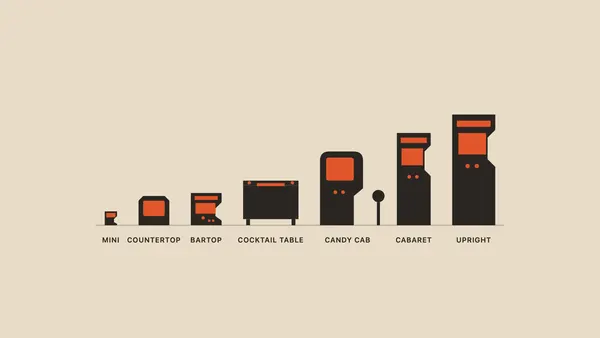
- Full-size arcade cabinets weigh 250–400 lbs and are designed for commercial floors, not home spaces
- Traditional button cabinets appeal mainly to those who grew up with them — less accessible to new or casual players
- Touchscreen systems are inclusive: anyone from age 5 to 85 can pick up and play without instruction
- Modern touchscreen cabinets offer curated multi-game libraries vs. the single-title format of vintage machines
The arcade is making a comeback. But the machines themselves have evolved in ways that most people do not expect.
If you have been browsing arcade machines for your home, bar, or entertainment space, you have probably noticed two very different approaches: touchscreen arcade machines and traditional joystick-and-button cabinets. Both carry the spirit of the golden age. But the experience they deliver, the way they look in your space, and the people they bring together can be surprisingly different.
The right choice depends less on what you remember and more on how you want to live now.
Why the Choice Is Harder Than It Looks
At first glance, the decision seems simple. Buttons or screen? Retro or modern? But the deeper you look, the more hidden trade-offs begin to surface.
Traditional arcade cabinets, the full-size standup machines with joystick panels, offer a powerful nostalgia factor. They look and feel like 1985. But that authenticity comes with real-world costs:
Footprint. A full-size cabinet takes up significant floor space, often 2 to 3 feet deep and over 5 feet tall. In a finished basement, study, or home bar, that is a serious commitment.
Maintenance. Mechanical buttons, joysticks, and coin mechanisms wear down. Replacement parts for legacy machines are increasingly difficult to source.
Accessibility. Button-heavy arcade machines tend to appeal to a narrow slice of players, usually those who grew up with them. They can feel intimidating or unfamiliar to younger family members, guests, or anyone who did not spend their teenage years in an arcade.
Aesthetics. Many replica cabinets use lightweight MDF construction with printed vinyl graphics. In a room designed with intention, they can feel out of place.
Touchscreen arcade machines solve many of these friction points, but not all touchscreen machines are created equal. Low-end touchscreen units can feel cheap, with dim displays, limited game libraries, and plastic housings that crack within a year.
The real question is not whether to go touchscreen or traditional. It is whether the machine you choose matches your space, your lifestyle, and the people you want to share it with.
What Actually Separates These Two Approaches
Understanding the difference between a touchscreen arcade machine and a traditional arcade cabinet comes down to five key dimensions: control interface, game variety, design integration, social accessibility, and long-term durability.
Control Interface: Touch vs. Buttons
Traditional arcades rely on physical joysticks, buttons, trackballs, or spinners. These mechanical inputs feel satisfying for games designed around them, especially fighting games and classic shooters.
Touchscreen machines use a responsive LCD display as the primary input. This opens the door to a much wider range of game types: trivia, card games, puzzle games, strategy, and drawing games that simply cannot exist on a button panel. The intuitive nature of touch also means zero learning curve for new players. Anyone who uses a smartphone already knows how to play.
Game Library: Depth vs. Breadth
Many traditional cabinets are either single-game machines or multi-game units loaded with thousands of ROMs, often of questionable legality and quality. The sheer number sounds impressive, but quantity rarely translates to replayability.
Premium touchscreen bartop arcade machines take a different approach: curated libraries with titles selected for variety, replay value, and broad appeal. A carefully chosen collection of 100 to 200 games, spanning puzzles, card games, action, word games, and trivia, tends to see more actual use than a chaotic list of 5,000 titles most people will never touch.
Design and Footprint
Full-size arcade cabinets dominate a room with average 2x3 ft floor footprint. That is part of the appeal for dedicated game rooms, but a serious limitation for refined spaces like home bars, studies, and living areas
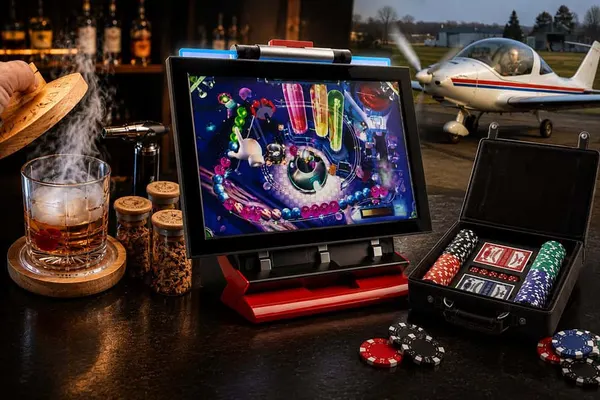
Countertop touchscreen arcade machines, by contrast, sit on an existing surface, often no larger than 15 by 20 inches. They integrate with the room rather than dominating it, making them suitable for spaces where aesthetics matter as much as entertainment.
Social Accessibility
This is where the two philosophies diverge most sharply. Traditional arcade games reward practiced skill. That is exciting for enthusiasts but alienating for casual players, especially across generations.
Touchscreen arcade machines, especially those with trivia, poker, solitaire, and puzzle categories, are inherently multigenerational. A grandparent and a teenager can sit side by side and enjoy the same machine without anyone needing to learn a complex button combination. That kind of shared moment is rare in modern entertainment.
Durability and Longevity
Mechanical parts wear. Joysticks drift. Buttons stick. Coin mechanisms jam. Over years of regular use, traditional arcade machines require ongoing maintenance.
A well-built touchscreen machine with commercial-grade LCD panels and solid-state electronics has far fewer moving parts. With no mechanical inputs to degrade, the lifespan of a premium touchscreen arcade extends well beyond what most button-based cabinets can match.
Side-by-Side: How the Approaches Compare
If your priority is reliving a specific classic title with original controls, a traditional cabinet may feel right. If what matters most is a machine that fits your space, welcomes every guest, and holds up for years, the picture shifts toward a premium touchscreen experience.
A Legacy That Bridges Both Worlds
Touchscreen bartop arcades are not new. They defined American bar culture in the 1990s and early 2000s. Merit Industries' Megatouch machines became fixtures in pubs, restaurants, and clubs across the country, with millions of plays logged every week.
When Merit Industries closed its doors in 2014, that entire category went quiet. The machines in bars aged, screens dimmed, and replacement units simply did not exist.
That gap is what makes the current moment significant. JVL, with over 30 years of experience in commercial gaming, has carried forward the touchscreen bartop arcade tradition with the ECHO line, refining the form factor, updating the technology, and curating a library built for the way people actually play today.
This is not a startup chasing nostalgia. It is a manufacturer with three decades of proven commercial performance, now making that same quality available for homes.
Where the Touchscreen Bartop Fits Into Your Life
The JVL ECHO HD3 touchscreen arcade was designed for people who want entertainment that belongs in their home, not just in their home.
With 149 built-in games spanning action, puzzles, poker, trivia, word games, and solitaire, it offers a depth of variety that keeps everyone engaged. Solo play or head-to-head, the machine adapts to the moment.
At just 15 inches by 19.5 inches, it sits comfortably on a bar top, a study desk, or a side table in a finished basement. No assembly. No downloads. No ongoing maintenance. Plug it in, power it on, and the room changes.
More than a game machine, it is a conversation piece that invites connection. The kind of object that draws guests in, sparks stories, and creates moments that last longer than any screen time ever could.
The Decision That Shapes the Room
Choosing between a touchscreen and a traditional arcade is not really about technology. It is about what role you want entertainment to play in your home.
If you want a statement piece that honors a specific era of gaming, a traditional cabinet is a fine choice. If you want something that fits your space, welcomes every generation, and feels as refined as the room around it, the touchscreen bartop category deserves a closer look.
Explore the ECHO HD3 and see how it fits into the spaces people actually live in.
Frequently asked questions
Are touchscreen arcade machines less fun than traditional button-controlled arcades?
Not at all. The fun is different, not less. Touchscreen arcades open up game categories like trivia, card games, puzzles, and word games that simply cannot work with joystick-and-button controls. For social gatherings and mixed-age groups, many players find touchscreen machines more engaging because everyone can participate without a learning curve.
Do touchscreen arcade machines break more easily than traditional ones?
The opposite is generally true. Traditional arcade machines rely on mechanical inputs — joysticks, buttons, coin slots — that wear down over time. A commercial-grade touchscreen arcade with solid-state electronics and no mechanical controls has fewer points of failure. Premium units like the ECHO HD3 are built to the same standards as commercial bar machines, designed for thousands of hours of use.
Can a touchscreen arcade machine work in a bar or restaurant, not just a home?
Yes. The ECHO HD3 is available in both a Home version (free play) and an Amusement version with a bill validator and coin acceptor for commercial revenue generation. The same build quality and game library apply to both, making it a viable choice for bars, restaurants, and entertainment venues looking to increase dwell time and guest engagement.
How many games come with a typical touchscreen bartop arcade?
It varies widely by manufacturer. Budget touchscreen units may include 20 to 50 low-quality titles. The JVL ECHO HD3 comes with 149 pre-installed games across multiple categories, including action, puzzles, poker, solitaire, trivia, and word games. All games are built in with no downloads or subscriptions needed.
Is a touchscreen arcade a good fit for a man cave or game room?
Absolutely. Its compact countertop design means it fits on a bar, a table, or a shelf without consuming floor space the way a full-size cabinet does. It works as both a centerpiece and a complement to other elements in the room. For spaces designed with intention, the ECHO HD3's premium finish and low profile make it a natural addition rather than a visual compromise.
What is the difference between the ECHO HD3 Home and Amusement versions?
The Home version is a free-play unit with no coin or bill acceptance hardware, designed purely for personal use. The Amusement version includes a bill validator and quarter acceptor, enabling operators to generate revenue. Both versions share the same 22-inch LCD touchscreen, 149-game library, and commercial-grade construction.