Bartop Arcade Machine for Home: Buying Guide 2026
Premium countertop arcade with built-in games, touchscreen controls, and heirloom craftsmanship for modern game rooms and home bars.

Highlights
- Most budget arcade machines are built to sell, not to last — novelty wears off within weeks
- "Thousands of games" claims often hide duplicates and titles nobody recognizes or actually plays
- Key factors to evaluate: game quality over quantity, materials that won't warp, and plug-and-play setup
- A quality bartop arcade earns its place permanently in your home rather than becoming a garage dust collector
Something has shifted in the way homeowners think about entertainment.
The living room television still flickers. The streaming queue still scrolls endlessly. But in homes across America, a quieter revolution is happening: people are turning spare rooms, basements, and home bars into spaces designed for connection, not consumption.
The bartop arcade machine has re-emerged at the center of that shift. Not as a relic of 1990s nostalgia, but as a refined piece of home entertainment that invites people to sit together, compete gently, and rediscover the kind of fun that does not require a Wi-Fi password.
If you have been considering a countertop arcade for your home, this guide walks through everything that matters in 2026: what to look for, what to avoid, and how to choose a machine that earns its place in your home for years to come.
Why Most Home Arcade Purchases Disappoint
Here is the uncomfortable truth about the home arcade market: most machines are built to be sold, not to be kept.
The internet is flooded with budget arcade cabinets promising thousands of games. They arrive in oversized boxes, require hours of assembly, and deliver a few weeks of novelty before collecting dust in the garage.
The deeper problem is not the price tag. It is the mismatch between expectation and experience:
Overwhelming game libraries filled with duplicates and titles nobody plays
Cheap materials that warp, peel, or rattle within months
Complicated setup involving software updates, firmware flashing, or soldering
Zero after-purchase support when something goes wrong
Oversized footprints that clash with any room that is not a dedicated game cave
For homeowners who value craftsmanship and design, the standard arcade cabinet feels like a compromise. And a bartop arcade machine for home use should never feel like settling.
What to Look for in a Bartop Arcade Machine in 2026
A buying decision at this level is not just about specs. It is about finding a home arcade machine with built-in games that respects the space it occupies and the people who gather around it.
Here are the dimensions that matter most:
Build Quality and Materials
A countertop arcade sits on your bar, your kitchen island, or your den table. It is always visible. The materials need to look and feel premium, not like a weekend DIY project. Look for commercial-grade construction, solid enclosures, and finishes that complement wood, stone, and leather.
Screen and Controls
Touchscreen interfaces have become the gold standard for tabletop arcade machines. They eliminate the clutter of joysticks and buttons, simplify navigation for all ages, and allow for a wider variety of game types, from action and puzzles to poker and trivia.
A high-definition LCD panel (22 inches or larger) ensures that gameplay feels vivid and responsive.
Game Library: Curation Over Quantity
More games does not mean more fun. In fact, a curated library of well-chosen titles consistently outperforms a bloated collection of thousands.
The best home arcade machines in 2026 ship with a carefully selected range of games across multiple genres: action, puzzles, card games, trivia, and more. Everything pre-installed. No downloads. No updates. Just turn it on and play.
Footprint and Design Integration
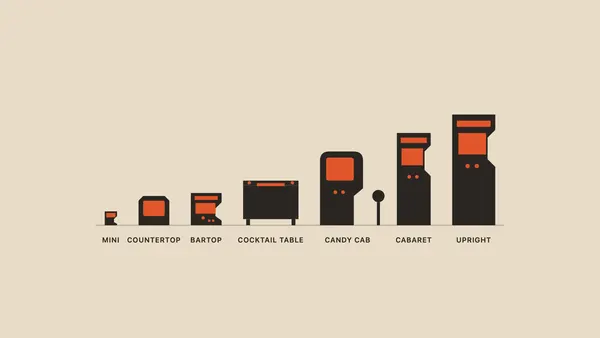
A mini arcade cabinet should enhance a room, not overtake it. Compact dimensions (think: roughly the size of a small microwave) allow placement on countertops, bar tops, side tables, or built-in shelving.
The best options feel like a piece of furniture, not a piece of gaming equipment.
Setup Simplicity
The ideal bartop arcade is truly plug and play. No assembly. No instruction manuals. No phone calls to tech support on day one. If it does not work out of the box, it is already behind.
Warranty and Human Support
This is where many arcade machines quietly fail. When a screen flickers or a software glitch appears six months later, who answers the phone? A real support team with a manufacturer warranty is a non-negotiable for a premium purchase.
How the Options Compare
The tabletop arcade market in 2026 breaks down into three broad categories. Here is how they stack up across the dimensions that matter most:
If your priority is raw game count at the lowest price, a standard cabinet or DIY build may work. But if what matters most is how the machine feels in your home, how long it lasts, and how effortlessly it brings people together, the picture shifts toward a different standard entirely.
The Heritage Behind the Machine
The countertop arcade machine is not a new invention. It dominated American bars, restaurants, and social halls throughout the 1990s and early 2000s. Brands like Merit Industries and their Megatouch line became cultural landmarks, turning ordinary bar counters into gathering points for trivia, poker, and friendly competition.
When Merit Industries closed its doors in 2014, the Megatouch legacy left a gap.
JVL stepped into that gap with over 30 years of commercial amusement engineering. The ECHO HD3 is the only actively manufactured successor to the classic bartop arcade format, built on decades of real-world performance in commercial venues across North America.
That commercial DNA is what separates ECHO from hobby-grade alternatives. Every component, from the 22-inch HD touchscreen to the solid enclosure designed to withstand years of daily use, reflects engineering tested in the most demanding environments: bars, bowling alleys, and amusement halls where machines run all day, every day.
More Than a Machine: A Centerpiece for Connection
The real value of a premium bartop arcade is not measured in specs or game counts.
It is measured in the moments it creates. The evening your grandchildren discovered Gone Fishing on the countertop and played for two hours straight. The poker night that ran late because nobody wanted to stop. The holiday gathering where three generations crowded around a touchscreen, laughing at the same game.
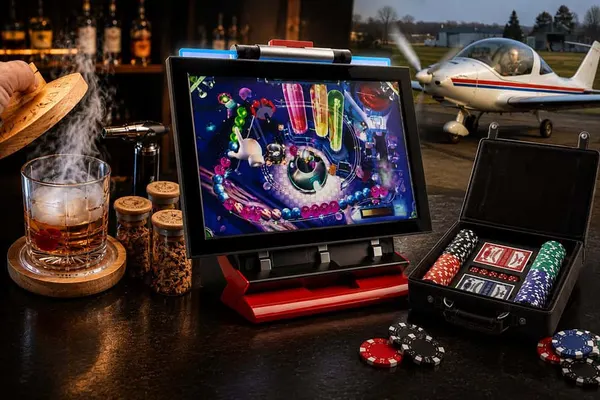
The JVL ECHO HD3 countertop arcade machine was designed for exactly those moments. 149 built-in games spanning action, puzzles, strategy, poker, and trivia. A compact 15" x 19.5" footprint that fits on a bar top or kitchen island. Plug-and-play simplicity with no assembly, no downloads, and no setup.
It arrives ready. You just turn it on.
Backed by a 1-year manufacturer warranty, Amazon Prime shipping, and a real human support team that picks up the phone, it is an ownership experience built for people who expect more from the things they bring into their homes.
Finding the Right Fit for Your Home
Choosing a bartop arcade machine is ultimately a question of values.
Do you want something that fills a corner with noise for a few months? Or do you want something that becomes part of your home, a piece that guests notice, that family members ask about, that still feels right five years from now?
If the second description resonates, the ECHO HD3 home arcade is worth a closer look.
Explore the full game library. See the machine in detail. And discover why homeowners across the country are choosing a different kind of entertainment for the rooms that matter most.
Frequently asked questions
What is the best bartop arcade machine for a home bar or game room?
The best option depends on what you value most. For homeowners who prioritize build quality, design integration, and a curated game library, the JVL ECHO HD3 is the leading choice in 2026. It is the only actively manufactured premium countertop arcade with commercial-grade construction and 149 built-in games. Its compact footprint fits naturally on bar tops, kitchen islands, and den counters without dominating the space.
How many games should a good home arcade machine have?
Quality matters far more than quantity. Machines advertising 5,000 or 10,000 games often include duplicates, broken ROMs, and titles with no replay value. A well-curated library of 100 to 200 games across multiple genres (action, puzzles, poker, trivia) provides more actual playtime and variety than an inflated list. The key is whether every game on the machine is worth playing.
Are touchscreen arcade machines better than joystick models?
For home use, touchscreen controls offer significant advantages. They eliminate physical wear on buttons and sticks, provide a more intuitive interface for non-gamers and older adults, and support a wider range of game types. Touchscreens also keep the machine's profile clean and compact, making it easier to integrate into living spaces where a full joystick panel would look out of place.
Do bartop arcade machines require assembly or software setup?
It depends on the machine. Many budget and DIY models require partial assembly, software configuration, or firmware updates. Premium plug-and-play models like the ECHO HD3 arrive fully assembled with all games pre-installed. You plug it into a standard outlet and start playing immediately. No tools, no downloads, no technical knowledge required.
Is a countertop arcade machine a good gift for someone who has everything?
A premium tabletop arcade is one of the most distinctive gifts for adults and families. It combines nostalgia, craftsmanship, and shared entertainment in a way that few other gifts can match. For empty nesters, retirees, or anyone who values unique home experiences, a high-quality countertop arcade creates ongoing enjoyment rather than a one-time novelty.
What kind of warranty and support comes with a home arcade machine?
Warranty coverage varies dramatically across the market. Many imported or budget machines offer no warranty at all, or only a limited 30-day return window. The JVL ECHO HD3 includes a full 1-year manufacturer warranty, free Amazon Prime shipping, and access to a dedicated support team staffed by real people. If troubleshooting does not resolve an issue, the unit is replaced.