25 Fun Facts About Classic Arcade Games That Shaped a Generation
The real stories behind the games, the arcades, and the generation that grew up feeding quarters into machines.

Highlights
- Pac-Man earned over $14 billion globally, making it the highest-grossing entertainment product of its era
- The golden age of arcades lasted just 5 years (late 1970s to early 1980s) yet permanently shaped popular culture
- Computer Space (1971) was the first mass-produced arcade game — it failed because the gameplay was too complex
- Space Invaders caused a national coin shortage in Japan due to overwhelming demand
The golden age of arcade video games lasted roughly five years, from the late 1970s to the early 1980s. In that short window, a handful of designers, engineers, and entrepreneurs created an entirely new form of entertainment - one that reshaped popular culture, generated billions in revenue, and gave a generation of young people a shared experience that still resonates decades later.
What follows are 25 facts about that era - not the generic trivia you'll find recycled across the internet, but the stories, milestones, and hidden details that connect to what it actually felt like to be part of it. Some of these you may remember firsthand. Others might surprise you. All of them are worth knowing.
The Quarter-Eating Origins: How the Arcade Era Began
Before Pac-Man, before Space Invaders, before the golden age that would change entertainment forever, there was a machine that almost nobody played. Computer Space, released in 1971, is widely credited as the first mass-produced coin-operated arcade video game. Designed by Nolan Bushnell and Ted Dabney, it featured a sleek, futuristic fiberglass cabinet - and gameplay that most bar patrons found bewildering. It sold modestly at best. But its failure taught Bushnell a critical lesson he would carry into his next venture: simplicity wins.
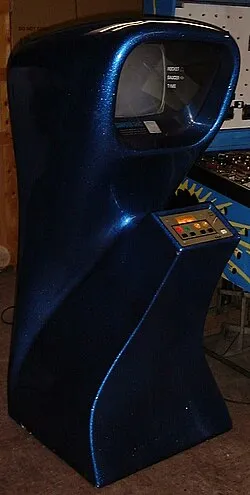 1. Computer Space (1971) was the first mass-produced arcade video game - and a commercial disappointment. Its co-creator, Nolan Bushnell, took what he learned and founded Atari, where accessible, intuitive gameplay became the guiding philosophy.
2. Space Invaders (1978) was so popular in Japan that it reportedly contributed to a temporary shortage of 100-yen coins. The claim has been repeated for decades and debated by historians, but the underlying truth is undeniable: Taito's marching-aliens game was a phenomenon that reshaped the industry overnight and signaled the start of the arcade boom in the United States.
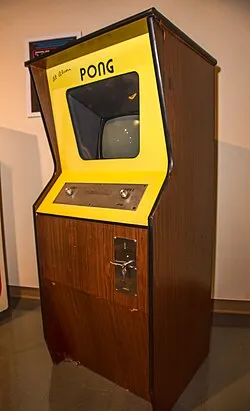
3. The first Pong prototype reportedly broke down because it was too popular. Installed at Andy Capp's Tavern in Sunnyvale, California in 1972, the machine allegedly stopped working within days - not from a mechanical fault, but because the coin box had jammed from an overflow of quarters. Whether the story has been embellished over the years or not, it captures the moment when coin-operated video games proved they could be enormously profitable.
4. The golden age of arcade video games is generally dated from 1978 to 1983 - a remarkably short window in which the medium went from curiosity to cultural force. During those five years, arcade revenues in the United States soared, new game concepts emerged at a staggering pace, and a trip to the local arcade became a routine part of daily life for millions of young Americans.
5. By 1982, the US arcade industry reportedly generated more revenue than both the American film industry and recorded music combined. The exact figures vary depending on the source, but the scale is clear: for a brief, extraordinary moment, the quarter-operated machines in shopping malls, pizza parlors, and corner stores were one of the largest entertainment industries in the country.
Records, Rivalries, and Milestones That Made History
The golden age produced games that didn't just entertain - they set records, launched empires, and introduced characters that would outlast the arcades themselves.
6. Pac-Man (1980) became one of the highest-grossing arcade games ever made. Exact lifetime revenue figures vary across sources and should be treated cautiously, but by any credible measure, Namco's dot-eating maze game was a commercial juggernaut on a scale the industry had never seen. It didn't just dominate arcades - it became one of the first video game properties to build an entire licensing empire around a single character.
7. Pac-Man's creator, Toru Iwatani, has described being partly inspired by the image of a pizza with a slice removed. It's one of the most famous origin stories in game design - a simple visual idea that produced one of the most recognizable characters in entertainment history. Iwatani was reportedly motivated to create something with broader appeal than the space-shooter genre that dominated arcades at the time, and his instinct proved spectacularly right.
8. Donkey Kong (1981) introduced a character originally called Jumpman - later renamed Mario. Designed by a young Shigeru Miyamoto at Nintendo, the game was a turning point for the industry. It told a simple story through gameplay, helped establish platforming as a genre, and launched a character who would become arguably the most famous figure in video game history.
9. Ms. Pac-Man started life as an unauthorized hack called "Crazy Otto." A group of MIT graduates created the modification, which improved on the original's maze patterns and ghost behavior. Rather than pursue legal action, Midway licensed the game officially - and Ms. Pac-Man went on to become one of the most acclaimed and commercially successful arcade games of the early 1980s, widely regarded by players as superior to the original.
10. Dragon's Lair (1983) used LaserDisc technology to display hand-drawn animation by former Disney animator Don Bluth. It cost fifty cents per play - double the standard quarter - and players lined up anyway. The game looked and felt like nothing else in the arcade: cinematic, gorgeous, ruthlessly difficult, and expensive for operators to maintain. Love it or hate it, nobody who saw it in an arcade forgot it.
Note: the video is taken from the Tommy's Gameplay YouTube channel.
Hidden Secrets and Easter Eggs Players Missed for Decades
Part of what made classic arcade games endlessly fascinating was the sense that there was always something more to discover - a hidden screen, a buried message, a secret the designers had tucked away for someone patient or lucky enough to find it.
11. The tradition of hiding secrets in video games traces back to programmer Warren Robinett. In 1980, Robinett secretly embedded his name in the Atari 2600 game Adventure - a quiet act of defiance against a company policy that refused to credit individual developers. The discovery helped popularize the term "Easter egg" in gaming, and the practice quickly spread to arcade titles where designers found their own ways to leave a hidden mark on the games they'd built.
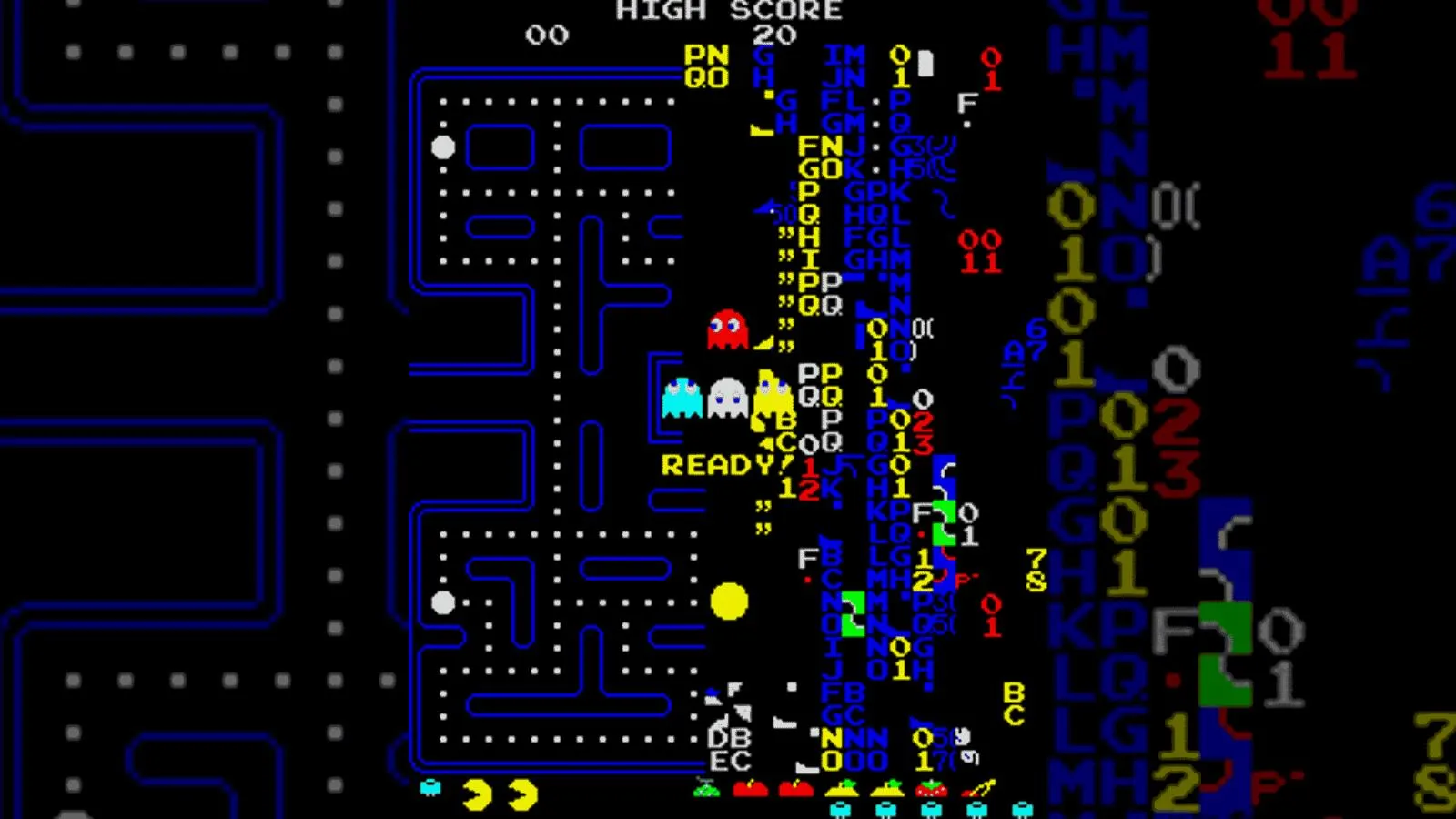
12. Pac-Man has a famous "kill screen" at level 256 that baffled players for years.
At that level, a software overflow bug causes the right half of the maze to dissolve into a wall of garbled symbols and random characters, making the stage effectively unplayable. For the rare few who reached it, the kill screen was both a devastating end and a strange badge of honor - proof that you had pushed the game beyond what its own code could handle.
13. Many golden-age developers hid their initials in their games' code as a quiet form of creative ownership. Because publishers like Atari deliberately kept designers anonymous - partly to prevent competitors from poaching talent - embedding a hidden signature was often the only way a programmer could claim any public credit for work that millions of people played every day.
14. Missile Command designer Dave Theurer reportedly had nightmares about nuclear war while developing the game. The game's ending - a wordless white flash that fills the screen when you inevitably fail - was a deliberate artistic choice. There is no victory condition in Missile Command. The game simply ends. It was one of the earliest examples of a video game making a genuinely sobering emotional statement, and players who lived through the Cold War understood exactly what it meant.
15. The code of many classic arcade games has continued to yield surprises decades after release. As hobbyist communities and digital preservationists have examined original arcade ROMs with modern analysis tools, they've uncovered hidden messages, unused graphics, developer credits, and undocumented features that no one saw during the games' commercial lifetimes - small time capsules left behind by the people who built them.
The Culture Behind the Cabinet: Arcades as Social Spaces
The games were remarkable on their own. But the arcades themselves were something more - they were places where a specific kind of social life happened, governed by unwritten rules that everyone who spent time there understood without being told.
16. Placing your quarter on the machine's marquee was the universal signal that you had claimed the next game. No sign explained it. No attendant enforced it. It was simply understood - a piece of social etiquette that emerged organically in arcades across the country. If your quarter was on the glass, your place was held. Violating the convention was one of the few things that could genuinely start a confrontation in an otherwise easygoing space.
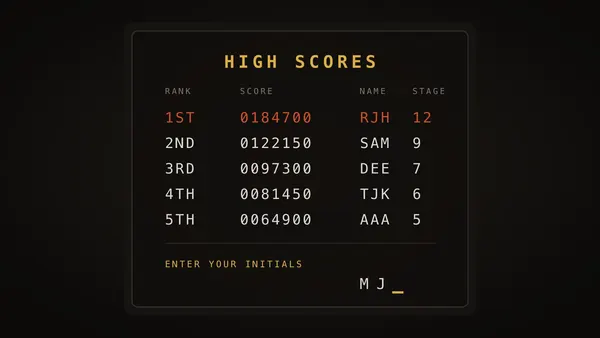
17. Arcade high-score boards were a form of local fame that mattered more than most people realize. Entering your three-letter initials after a top score was a small, public act of identity - your mark on a machine that hundreds of other people would play that week. In a pre-internet world, that leaderboard was the only public record of what you'd accomplished, and it was visible to everyone who walked through the door.
18. The sensory experience of a busy arcade was unlike anything else in everyday American life. A dozen different electronic soundtracks overlapping. The clatter of coins hitting metal. The glow of CRT screens in a deliberately dimmed room. The particular mix of concentration and socializing - someone playing intently while friends watched, offered commentary, and waited their turn. For the generation that grew up in those rooms, the sensory memory is specific and vivid in a way that's difficult to convey to anyone who wasn't there.
19. Arcades functioned as genuine community gathering places throughout the late 1970s and 1980s. They were after-school destinations, weekend hangouts, and informal social clubs. Friendships formed there. Rivalries developed. For many teenagers and young adults, the local arcade was one of the few places where you could spend time independently, on your own terms, with no agenda beyond playing one more round and seeing who else showed up.
That social dimension - the shared space, the conversation, the connections that formed around a row of glowing screens - is something many people genuinely miss about the era. It's worth noting that this quality is part of what modern home arcade machines are designed to bring back: not just the games themselves, but the reason people gathered around them in the first place.
How Classic Arcade Games Shaped Entertainment Forever
The golden age of arcades lasted only a few years. Its influence on entertainment, design, and popular culture has lasted decades - and shows no sign of fading.
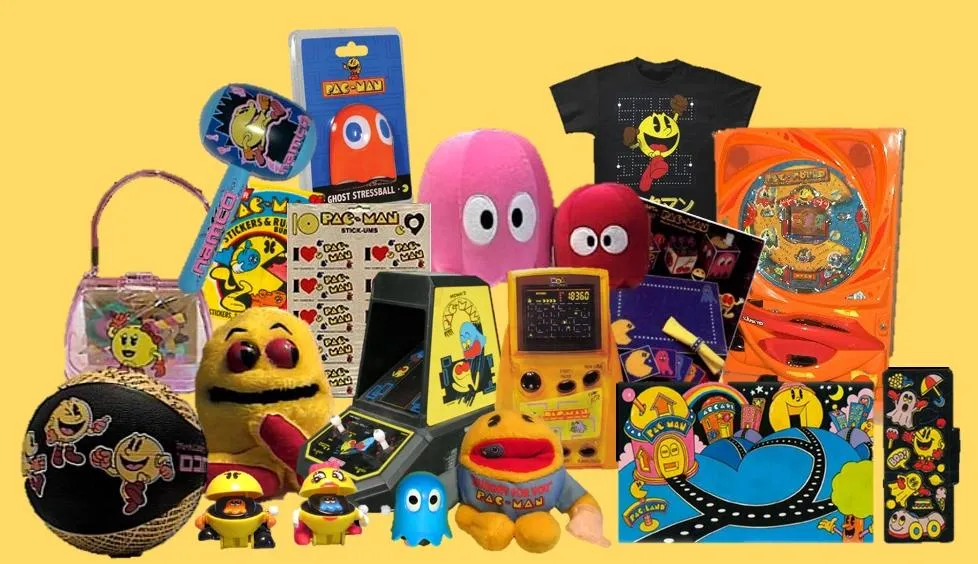
20. Pac-Man was the first video game character to generate a massive licensed merchandise empire. Lunchboxes, bedsheets, breakfast cereal, a top-40 pop single ("Pac-Man Fever" by Buckner and Garcia reached the Billboard charts in 1982), and an animated television series produced by Hanna-Barbera - all within two years of the game's release. Pac-Man demonstrated that a video game character could have commercial and cultural reach far beyond the arcade itself, blazing a trail that countless franchises would follow.
21. The severe hardware constraints of early arcade machines produced some of the most elegant game design in history. With tiny amounts of memory and rudimentary graphics capabilities, designers had no choice but to focus relentlessly on gameplay mechanics - the feel of the controls, the rhythm of difficulty progression, the addictive loop that made a player reach for another quarter. Those limitations produced games with a purity and directness of design that many modern titles, built with vastly greater technical resources, struggle to match.
22. Core design principles pioneered in the arcade era remain foundational to modern interactive design. Progressive difficulty curves. Immediate, clear feedback. The "easy to learn, difficult to master" philosophy. These ideas were refined through thousands of arcade games competing for quarters in real time, and they still underpin everything from smartphone apps to theme park attractions.
23. The arcade era left a visible mark on film, television, and music throughout the 1980s and beyond. Tron (1982), WarGames (1983), and The Last Starfighter (1984) drew directly from the culture of arcade play. The visual language of early video games - pixel art, grid-based layouts, bold geometric shapes - influenced graphic design, fashion, and music video aesthetics in ways that remain recognizable today.
Bringing the Arcade Home: Why the Classics Still Matter
The arcades didn't disappear overnight. But they did disappear.
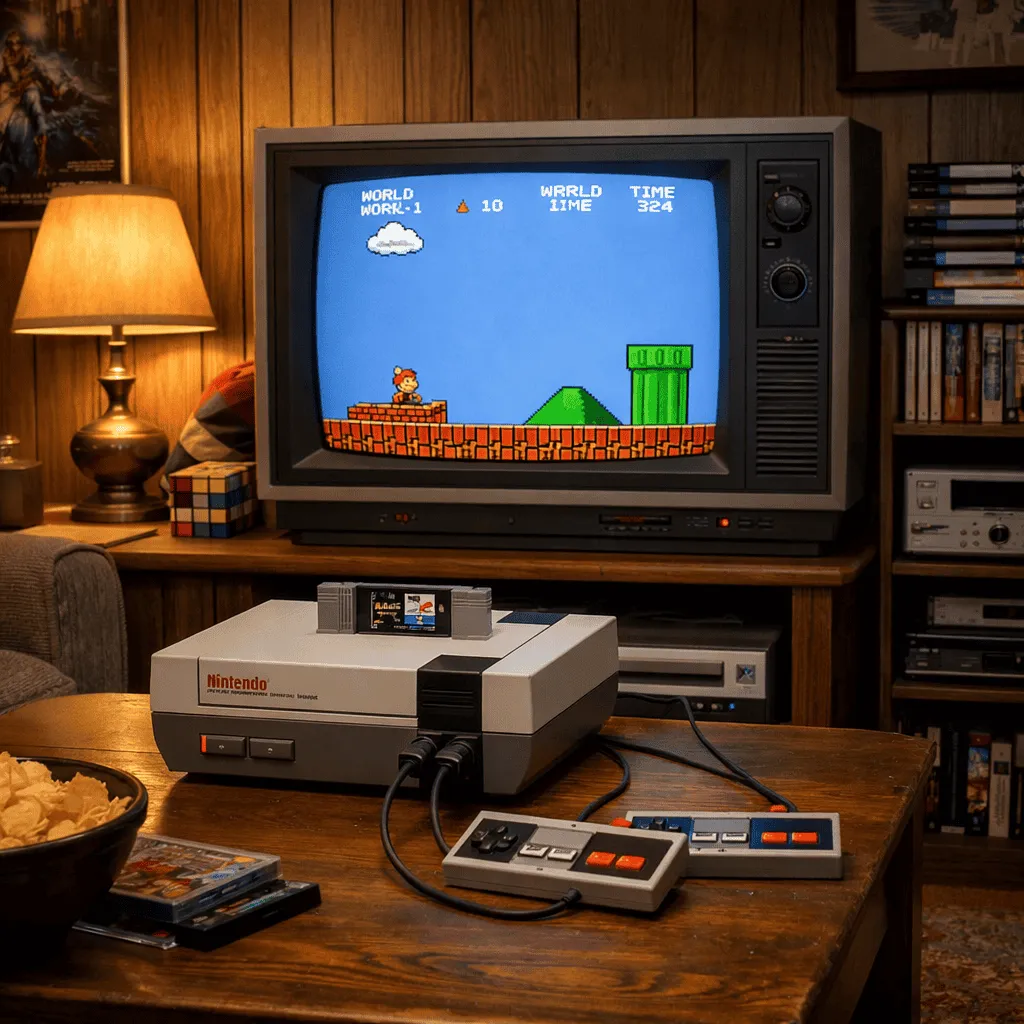
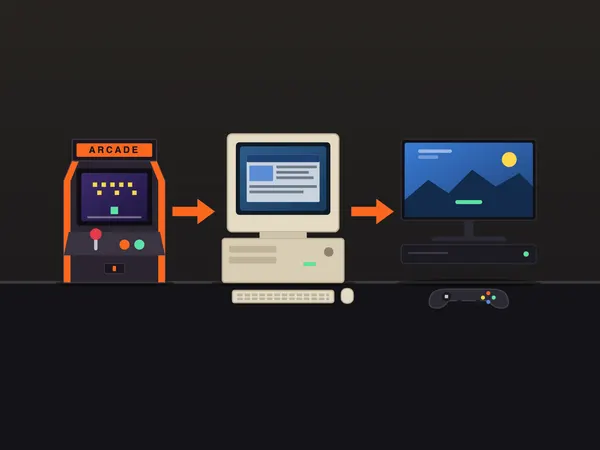
24. The rise of home consoles in the mid-1980s gradually drew players out of arcades and into living rooms. Systems like the Nintendo Entertainment System offered convenience and an ever-growing library of titles that could be played without leaving home. The trade-off was real: home play was more accessible, but it couldn't replicate the social atmosphere, the dedicated hardware, or the particular feeling of standing at a machine in a room full of other people doing the same thing.
25. By the early 1990s, most of the arcades that defined the golden age had closed their doors. Rising real estate costs, shifting entertainment preferences, and the increasing power of home systems made the quarter-operated business model unsustainable for most operators. The machines that once filled those rooms - the cabinets, the side art, the games themselves - dispersed into private collections, storage, and memory.
But the games endure. And the desire to play them again - not as a novelty, but as a genuine reconnection with something that mattered - has only grown stronger as the generation that grew up on them reaches a stage of life where home spaces are designed for comfort, hospitality, and the things that bring people together.
Today, classic arcade games are still very much available to play at home. Modern bartop arcade machines have made it possible to bring the experience into a home bar, basement lounge, or recreation room without dedicating an entire room to full-size cabinets. The JVL Echo Home is one example worth knowing about - a premium countertop arcade machine with 149 built-in games, plug-and-play, with no Wi-Fi or downloads required. Designed as a modern revival of the classic bar-top arcade format, it's built to fit the kind of adult home spaces where friends gather, stories get told, and a good conversation can start with the words "I used to play this one."
The 25 facts in this article span decades, but they all point toward the same truth: the games of the golden age were built to last - in memory, in influence, and in the simple, enduring pleasure of playing them.
Frequently asked questions
What was the first commercially successful arcade game?
Computer Space, released in 1971, was the first mass-produced coin-operated video game. It struggled commercially because the gameplay was considered too complex for casual players. The breakthrough came a year later with Pong, which used simple controls that anyone could pick up in seconds.
Why is Pac-Man considered the most successful arcade game ever?
Pac-Man earned over $14 billion in revenue globally — more than any other entertainment product of its era, including major films. Its appeal crossed gender and age boundaries at a time when most arcade games targeted young men, which dramatically expanded the audience for arcades.
How long did the golden age of arcades actually last?
The golden age ran roughly from 1978 to 1983 — just five years. Despite the short window, it produced the cultural icons that still define arcade gaming: Space Invaders, Pac-Man, Donkey Kong, Galaga, and Asteroids. After 1983 the home console market and the video game crash reshaped the industry.
Did Space Invaders really cause a coin shortage in Japan?
Yes. When Space Invaders launched in 1978, demand was so high that 100-yen coin reserves were depleted faster than the Japanese mint could replace them. Operators had to install coin-return systems and the government temporarily increased coin production to keep up with arcade traffic.
Can you still play the original classic arcade games at home?
Original arcade boards from the 1980s are increasingly rare and expensive, often requiring restoration and specialized maintenance. Modern home arcade machines like the JVL ECHO HD3 carry the same lineage — multi-game touchscreen libraries, plug-and-play setup, and the same social, skill-based gameplay that defined the era.