Revenue Share or Upfront Purchase: Which Arcade Machine Model Actually Works for Your Business?
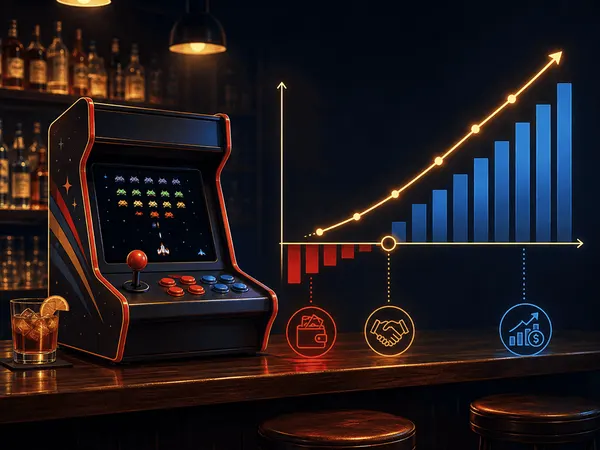
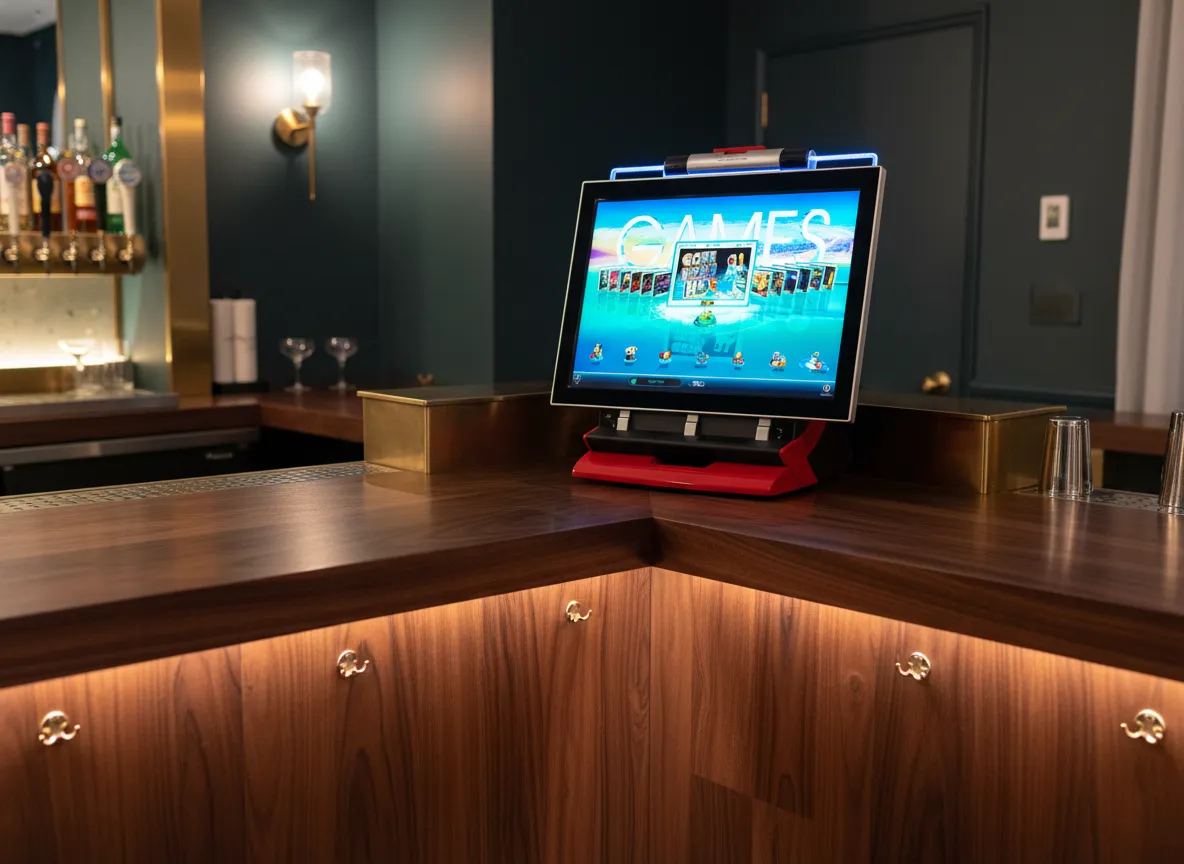
The machine sits in the corner of a well-run bar, glowing softly. Regulars gravitate toward it. Drinks get ordered. Conversations start.

Highlights
- Revenue share has zero upfront cost but operators keep only a fraction of earnings over the machine's lifespan
- Outright purchase means 100% of revenue from day one — typically pays back the investment within 12–18 months
- Revenue share works best for new venues testing entertainment additions with limited capital
- Established operators with steady foot traffic almost always earn more through full ownership
The machine sits in the corner of a well-run bar, glowing softly. Regulars gravitate toward it. Drinks get ordered. Conversations start.
The owner knew the moment it arrived that it was the right call. What took longer to figure out was how to get there — specifically, which business arrangement made the most financial sense.
This question comes up more than you'd expect. And the answer is rarely obvious.
Two Models, Two Very Different Relationships
Before choosing, it helps to understand what each model actually means in practice — not just on paper.
Revenue share means a third party installs the machine at no upfront cost. In exchange, a percentage of earnings is paid out to the machine owner or distributor each month. The bar or venue keeps the rest.
Outright purchase means the business buys the machine, owns it entirely, and keeps 100% of everything it generates from day one.
Both have genuine merit. The right answer depends on what kind of operator you are and what stage your business is in.
The Hidden Logic of Revenue Share
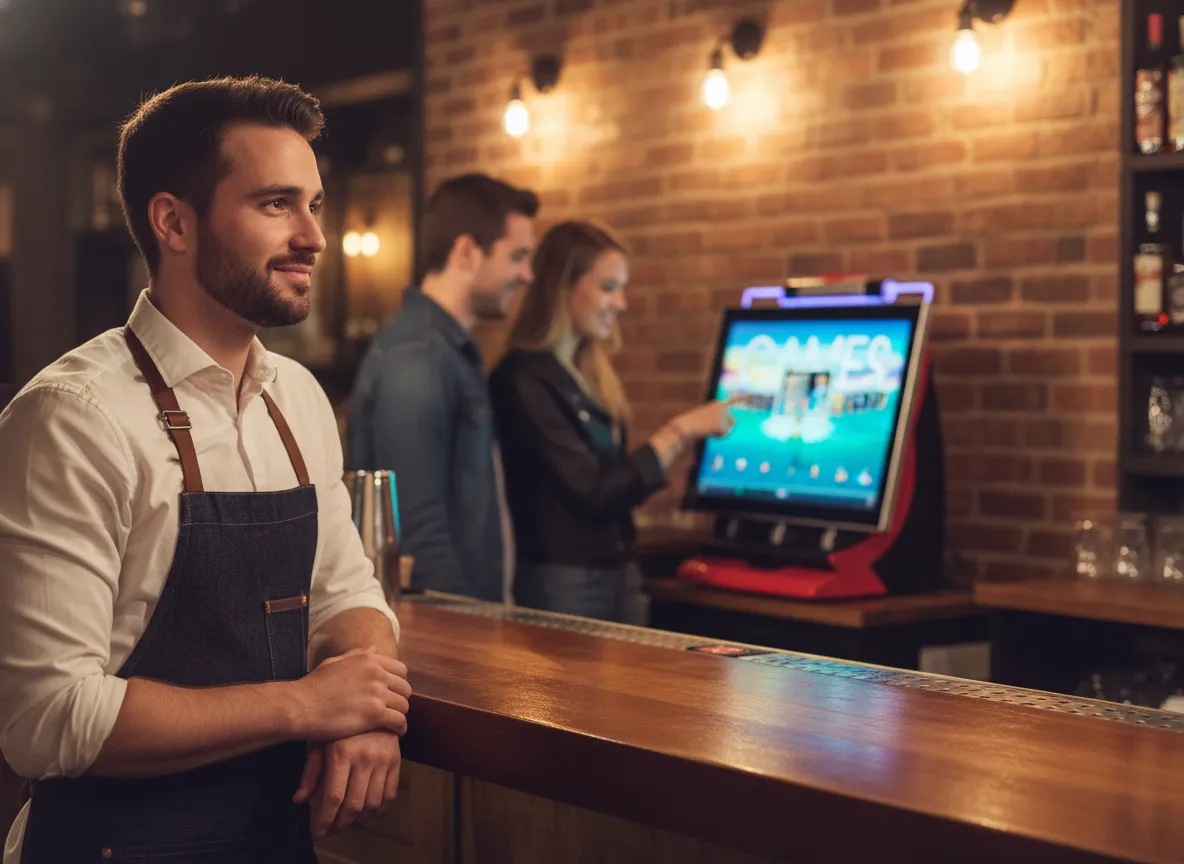
For a new bar or venue, revenue share feels like a gift. There is no capital outlay, no depreciation to track, no risk if the machine underperforms in its first months.
That logic is real. It has helped many operators test entertainment additions without committing budget they did not have.
But the arrangement comes with costs that are easy to underestimate.
What revenue share actually means for margins:
You surrender a portion of every dollar the machine earns — typically 40 to 60 percent, depending on the distributor
That split continues indefinitely, whether the machine earns $200/month or $2,000/month
You have limited control over machine placement, upgrades, or replacement timelines
The distributor's priorities are not always aligned with yours
The machine pays for itself, many times over — but only for one party.
Over 24 months, a well-placed machine in a high-traffic venue can generate substantial income. Under a revenue share model, half of that quietly leaves the room.
The Case for Owning Outright
Outright purchase feels heavier at the start. A meaningful investment for a quality machine.
But ownership changes the math entirely.
Once the purchase is made, every dollar the machine earns belongs to the business. There are no monthly splits, no contract negotiations, no dependency on a distributor's maintenance schedule.
What full ownership delivers:
Complete revenue capture from the first coin played
Asset on your balance sheet with real resale or trade-in value
Full control over placement, use hours, and game configuration
No ongoing obligations to a third party
For established venues with reliable foot traffic, the break-even calculation often favors outright purchase within 12 to 18 months — sometimes faster.
The machine stops being a cost and starts being an investment.
A Framework for Deciding
Neither model is universally better. What matters is the fit between the model and the business reality.
Revenue share may make more sense if:
The venue is in its first year of operation
Cash flow is tight and capital preservation is the priority
Foot traffic is unpredictable or highly seasonal
There is genuine uncertainty about whether gaming entertainment will perform in this particular space
Outright purchase tends to win if:
The venue has consistent, proven foot traffic
The owner has experience with entertainment or gaming revenue
Long-term margin optimization matters more than short-term capital conservation
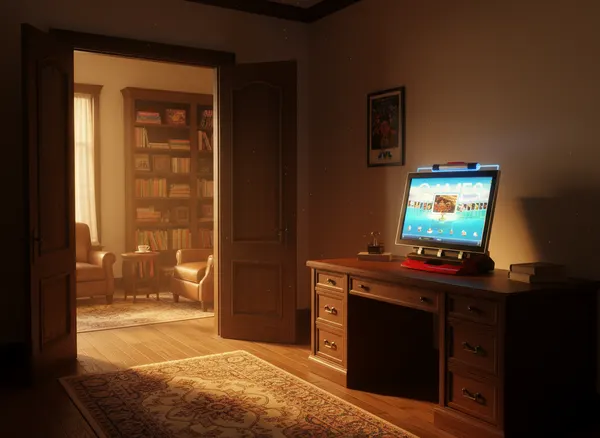
The machine will anchor a specific area (home bar, game room, VIP lounge) where it can become a signature experience
The question is not which model costs less. The question is which model creates more value over time.
What the Numbers Tend to Show
Operators who have run both models often describe the same arc.
Early in their business, revenue share felt smart. Flexible. Low-risk. But as the venue stabilized and earnings grew, the split became a visible drag on profitability. The machine was performing well. The returns just weren't fully theirs.
The shift to outright ownership, when it came, consistently felt like a correction. Not a risk, but a recognition.
A simplified 24-month comparison:
Assume a machine placed in a mid-volume venue generates $500/month in revenue.
Under a 50/50 revenue share arrangement, the business takes $6,000 over 24 months.
Under full ownership of a machine purchased at a one-time cost, the business captures $12,000 over the same period — with the asset still fully operational and zero ongoing obligations.
The difference is not marginal.
Quality Changes the Equation
One factor that shifts the calculation significantly: the quality of the machine itself.
A low-margin unit placed under revenue share may never justify the floor space it occupies. But a premium machine, with deep game libraries, reliable hardware, and genuine visual appeal, becomes something different entirely.
It becomes an experience anchor.
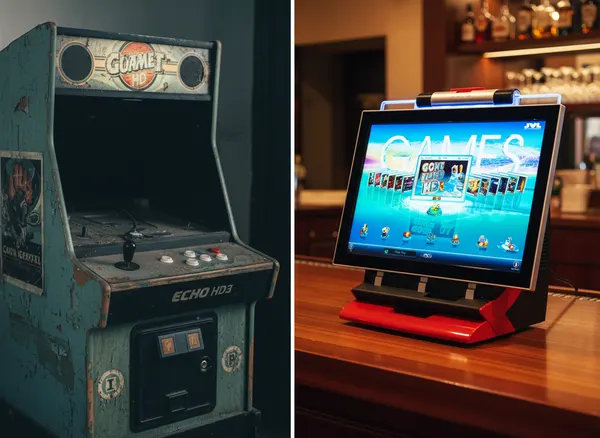
The JVL ECHO HD3 is the kind of machine that changes how guests perceive a space. With 149 built-in games, a 22-inch touchscreen, and a design language that fits naturally in upscale bars, lounges, and entertainment areas, it is built for venues where experience is part of the brand.
Machines that create genuine dwell time, reorder behavior, and social sharing are assets in the truest sense. They belong on a balance sheet, not in a split arrangement.
The ECHO HD3 arcade machine also ships ready to play with no setup required, which removes one of the practical objections to outright ownership: the installation complexity that revenue share arrangements typically absorb.
Plug in. Power on. Done.
The Relationship Dimension
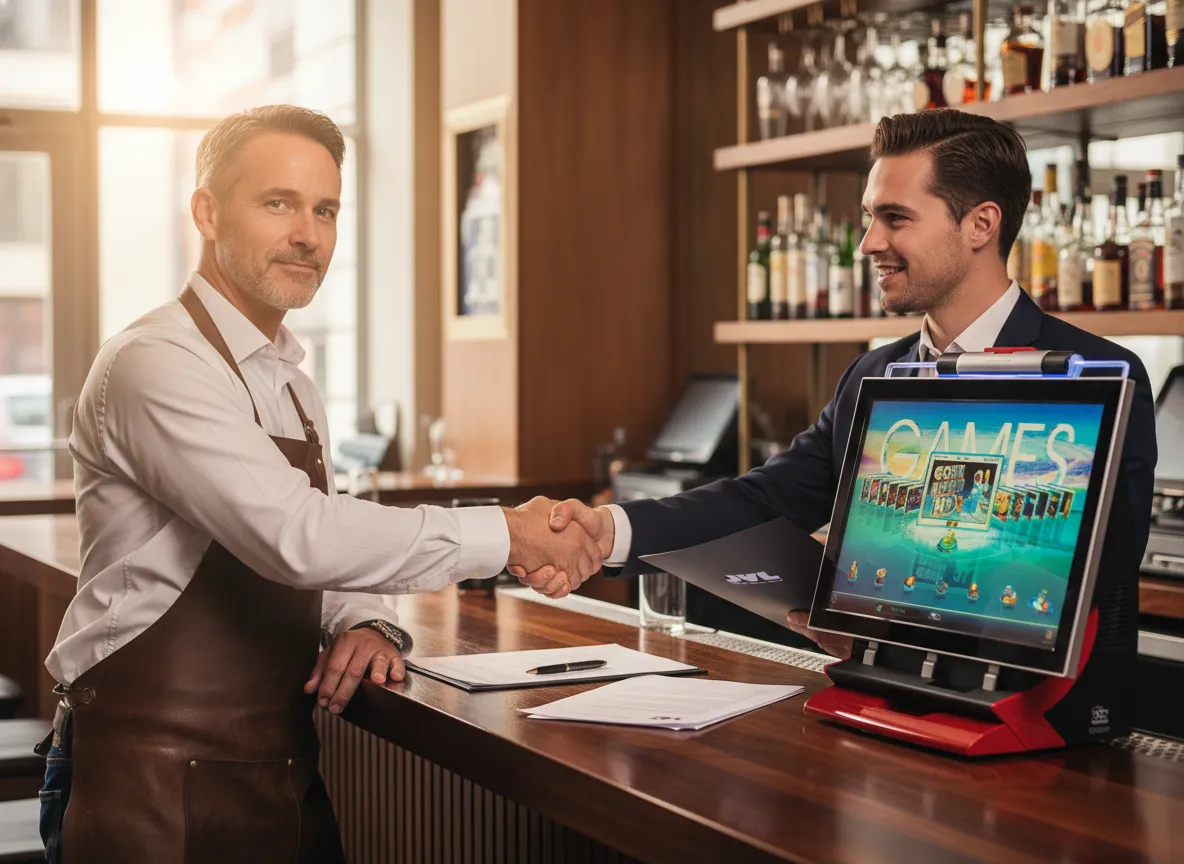
There is one aspect of this decision that financial models tend to underweight: control over the guest experience.
Under revenue share, the distributor decides which machine arrives, when it gets serviced, and when it gets replaced. The venue owner operates within someone else's timeline.
Under outright ownership, those decisions belong to the business. A machine can be repositioned, reconfigured, or featured in promotions without asking anyone's permission.
For operators who think carefully about their guest experience — and most serious ones do — that autonomy has real value. It means the entertainment piece of the operation can be managed with the same intentionality as the menu, the music, or the lighting.
What the Right Choice Feels Like
Operators who make the switch from revenue share to ownership describe a similar feeling.
Not relief, exactly. More like clarity.
The sense that a revenue stream they had been partially watching now belongs entirely to them. That a piece of their venue is now working for them rather than alongside them under someone else's terms.
That shift is worth more than any spreadsheet can fully capture.
If your venue is ready for that kind of clarity, the math — and the experience — tend to follow.
Frequently asked questions
What is the difference between revenue share and outright purchase for arcade machines?
Outright purchase means the operator pays the full machine cost upfront and keeps 100% of revenue from day one. Revenue share means the supplier provides the machine at no upfront cost in exchange for an ongoing percentage of earnings — typically 30 to 50%. The choice comes down to upfront capital, expected revenue, and how long the machine will stay in service.
How long does it take an arcade machine to pay for itself?
A well-placed arcade machine in a high-traffic bar or restaurant typically pays back its purchase price within 12 to 18 months of coin-op revenue. After that point, all earnings are pure profit minus minimal maintenance. Lower-traffic venues take longer — 24 to 36 months is common.
When does revenue share actually make more sense than buying?
Revenue share works best for new venues with limited capital, uncertain traffic patterns, or short-term operating plans. If you cannot afford to absorb a $5,000–$8,000 machine cost upfront, or if you want to test arcade entertainment before committing, revenue share removes the financial risk. The tradeoff is that you keep less of each dollar earned over the long run.
What is a typical revenue-share split on an arcade machine?
Most arcade machine revenue-share agreements range from a 70/30 to 50/50 split, with the operator (venue) keeping the larger share in most cases. The exact percentage depends on the machine type, the supplier, the venue size, and how much the supplier handles maintenance and game updates. Read the contract carefully — terms vary widely.
Can I switch from revenue share to ownership later?
Many revenue-share agreements include a buyout clause, allowing the operator to purchase the machine outright after a set period or after earnings reach a defined threshold. If long-term ownership is your goal, ask about buyout terms before signing. Without that option, you may be locked into ongoing revenue splits indefinitely.