How does an arcade get the games for its machines?
Arcades get games through direct purchases, leasing, or revenue-share deals. Learn how each model works and what fits different venue types.

Highlights
- Arcades acquire games through direct purchase ($2,000–$8,000), leasing ($200–$500/month), or revenue sharing
- Revenue-sharing splits earnings 50–70% to the operator with no upfront capital required
- Used machines cost $500–$3,000 but carry higher maintenance risk and limited or no manufacturer support
- Acquisition strategy depends on venue size, available capital, and the operator's risk tolerance
Arcades acquire games through purchasing from manufacturers, leasing arrangements, revenue-sharing agreements, or buying used equipment. New commercial arcade machines cost $2,000-$8,000 directly from manufacturers like Raw Thrills, Bandai Namco, or Sega. Leasing programs allow operators to pay monthly fees ($200-$500) rather than full upfront costs, with manufacturers retaining ownership. Revenue-sharing splits earnings between arcade and game supplier, typically 50-70% to operator. Used equipment markets provide affordable options at $500-$3,000 per machine, though condition and support vary significantly.
Game acquisition strategy depends on venue size, capital availability, and risk tolerance. New machines provide warranty support and latest attractions. Used equipment reduces initial investment but increases maintenance responsibilities.
Arcade game acquisition methods:
Direct purchase: $2,000-$8,000 per new machine, full ownership
Leasing arrangements: $200-$500 monthly, manufacturer retains ownership
Revenue-sharing: 50-70% operator split, no upfront cost
Used equipment: $500-$3,000 per machine, condition varies
Auction purchases: Below-market prices, significant risk
Trade-ins: Exchange underperforming machines for new games
Acquisition costs represent just initial investment. Ongoing maintenance, location fees, and eventual replacement create continuous capital needs. Home systems eliminate these commercial considerations through simple one-time purchases.
Do arcades pay licensing fees for games?
Arcades typically do not pay separate licensing fees because game costs include licenses when purchasing from legitimate manufacturers. The $3,000-$6,000 machine price incorporates intellectual property rights for commercial operation. Manufacturers secured licenses from game publishers before producing cabinets. However, operators using unauthorized multi-game boards or emulation-based systems may violate licensing agreements, creating legal risks. Some vintage game restorations require obtaining rights from original publishers depending on jurisdiction.
Legitimate commercial operators acquire properly licensed equipment from established manufacturers, ensuring legal compliance. Gray market systems claiming thousands of games often operate in licensing gray areas or outright infringement.
Licensing in arcade operations:
New machines: Licenses included in purchase price
Manufacturer responsibility: Secures rights before production
Operator obligations: Purchase from legitimate sources
Multi-game boards: Often unauthorized, legal risk
Vintage restoration: May require publisher permission
Emulation systems: Typically violate intellectual property rights
Legal compliance matters for commercial operations facing potential lawsuits and equipment seizures. Home entertainment users should similarly verify that purchased systems include proper licensing for included games, ensuring worry-free ownership.
What determines which games arcades choose?
Arcades choose games based on revenue performance, target demographics, floor space availability, and initial costs. Operators track daily earnings per machine, replacing titles generating under $150-$200 monthly. Demographic alignment matters critically because fighting games succeed in urban venues attracting competitive players while redemption games work better in family centers. Floor space calculations consider revenue per square foot, favoring compact high-earning games over large low-performers. Initial costs must justify expected returns, with expensive machines requiring higher earnings thresholds.
Smart operators data-driven decisions rather than personal preferences. Successful game mixes balance proven classics with trending new releases and demographic-specific titles.
Game selection criteria:
Revenue performance: Minimum $150-$200 monthly per machine
Target demographics: Age and interest alignment with venue patrons
Space efficiency: Revenue per square foot calculations
Initial investment: Cost versus expected earnings justification
Maintenance requirements: Some games need frequent servicing
Novelty factor: New releases attract attention temporarily
Portfolio balance: Mix of classic, current, and diverse genres
Operators continuously optimize game selections, monitoring performance weekly and rotating underperformers within 30-60 days. The process requires business discipline and willingness to remove personally favored games that don't generate adequate returns.
How do home arcade systems handle game licensing?
Home arcade systems handle licensing through manufacturer agreements with game publishers before sale, with legitimate companies securing rights for all included titles. Premium systems from established brands include 100-150 legally licensed games in purchase prices. Manufacturers negotiate with publishers like Namco, Capcom, and Atari, paying royalties or licensing fees before loading games onto systems. Customers receive proper licenses automatically with purchase, ensuring legal ownership without separate fees or concerns.
Budget systems claiming thousands of games often operate in legal gray areas, potentially using unauthorized ROMs or emulation without proper licensing. Quality manufacturers prioritize legal compliance even if it means smaller curated libraries.
Home system licensing approaches:
Premium manufacturers: Secure rights for all included games
Purchase includes licenses: No separate customer fees required
Curated libraries: Quality over quantity, proper authorization
Budget systems: Often questionable licensing status
DIY builds: User responsible for legal compliance
Manufacturer responsibility: Proper rights before product sale
Buyers should verify that systems include properly licensed games rather than unauthorized emulation. Legitimate manufacturers clearly communicate licensing compliance. Quality systems from established companies provide peace of mind through comprehensive legal licensing of curated game collections.
Frequently asked questions
How do arcade operators actually acquire games for their machines?
There are three main paths: direct purchase from the manufacturer ($2,000–$8,000 per machine), monthly leasing ($200–$500 per machine), and revenue sharing with the supplier (typically 50–70% to the operator with no upfront cost). The choice depends on capital, venue type, and how long the operator plans to keep the machines.
Do arcade operators have to pay licensing fees for the games?
Yes, but licensing is typically built into the price of the machine. When an operator buys or leases a commercial arcade unit, the games come pre-licensed by the manufacturer. Operators who add unlicensed or pirated games risk legal action and lose any manufacturer warranty or support.
How much do used arcade machines cost?
Used arcade machines typically range from $500 to $3,000 depending on condition, brand, and game library. The savings versus a new unit are real, but used machines carry higher maintenance risk, often have no manufacturer support, and may use outdated hardware. The lower purchase price can be offset by ongoing repair costs.
Can arcades add new games to existing machines?
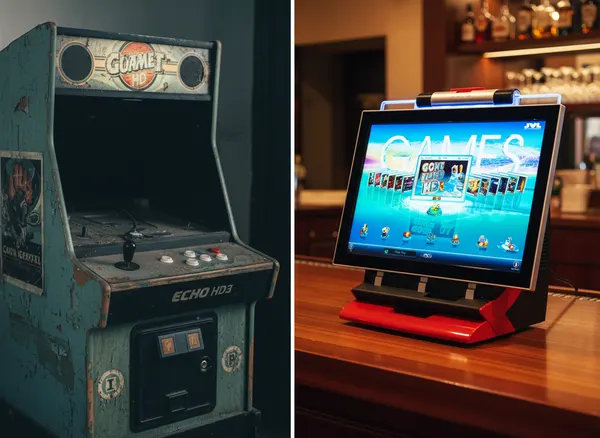
It depends on the machine. Modern commercial systems typically lock the game library for licensing and reliability reasons. Some older systems support cartridge or board swaps, but adding games usually requires manufacturer involvement. For home and bar machines like the JVL ECHO HD3, the 149-game library is fixed by design — every title is curated and supported.
Which acquisition path is best for a brand-new arcade business?
For new operators with limited capital, revenue sharing is often the safest starting point — no upfront cost, predictable revenue split, and the supplier handles most issues. Established venues with steady traffic almost always do better through direct purchase, since the long-term economics favor full ownership.