Are arcade games good for your brain?
Arcade games boost hand-eye coordination, reaction time, and spatial reasoning. See which game types offer the best proven cognitive benefits.

Highlights
- Arcade games improve hand-eye coordination, reaction time, spatial awareness, and problem-solving skills
- Studies show action games enhance visual attention processing and decision-making speed
- Strategic and puzzle games develop pattern recognition and predictive thinking abilities
- Active, skill-building play provides significantly greater cognitive benefit than passive or mindless gaming
Arcade games are good for your brain when played in moderation, improving hand-eye coordination, reaction time, problem-solving skills, and spatial awareness. Studies show that action games enhance visual attention and decision-making speed. Puzzle-based arcade games like Tetris improve spatial reasoning and planning abilities. Strategic games develop pattern recognition and predictive thinking. However, excessive play without balance can reduce benefits, and violent game content may have negative effects depending on age and individual factors.
Cognitive benefits require active engagement rather than mindless repetition. Games challenging players to improve performance and develop strategies provide greater brain training value than those allowing passive play patterns.
Documented cognitive benefits:
Hand-eye coordination: Precise timing and motor control
Reaction time: Faster visual processing and response
Spatial awareness: 3D thinking and navigation skills
Problem-solving: Strategic planning and pattern recognition
Working memory: Tracking multiple elements simultaneously
Attention span: Sustained focus under time pressure
Decision-making: Quick judgments with incomplete information
Research indicates arcade gaming activates multiple brain regions simultaneously, creating neural pathway development similar to other skill-based activities. Arcade machines providing diverse game genres offer varied cognitive challenges supporting different mental skills.
What cognitive skills do arcade games develop?
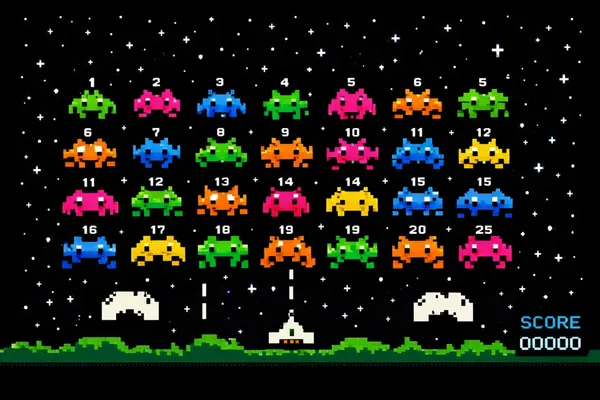
Arcade games develop visual processing, motor coordination, strategic thinking, and adaptive learning. Action games like Space Invaders enhance ability to track multiple moving objects simultaneously while making rapid decisions. Puzzle games including Tetris improve spatial manipulation and planning ahead. Fighting games develop prediction skills and pattern recognition. Racing games enhance hand-eye coordination and reaction timing. The variety across genres means comprehensive game libraries provide well-rounded cognitive training.
Skill development depends on game complexity and player engagement levels. Challenging gameplay forcing adaptation and improvement yields better cognitive benefits than easy games allowing passive success.
Specific cognitive improvements by game type:
Action shooters: Visual attention, reaction time, multitasking
Puzzle games: Spatial reasoning, planning, problem-solving
Fighting games: Pattern recognition, prediction, timing precision
Racing games: Hand-eye coordination, trajectory calculation
Strategy games: Resource management, long-term planning
Rhythm games: Timing accuracy, audio-visual coordination
Neuroscience research confirms that video gaming creates measurable brain changes in attention, spatial navigation, and fine motor control regions. Regular moderate play (30-60 minutes several times weekly) provides optimal benefits without excessive screen time concerns. Home arcade machines facilitate healthy play patterns through parental oversight and natural family integration.
Can arcade games improve reaction time?
Arcade games can significantly improve reaction time through repeated exposure to time-sensitive challenges requiring split-second decisions. Studies show action game players demonstrate 10-20% faster reaction times than non-players in standardized tests. The improvement transfers beyond gaming to real-world situations requiring quick responses. Games like Space Invaders, Galaga, and fighting titles specifically train visual-motor response pathways through constant practice of stimulus-response loops.
Reaction time improvements occur through neuroplasticity, the brain's ability to form new neural connections through repeated activities. Arcade gaming creates thousands of practice repetitions per session, accelerating development.
Mechanisms of reaction time improvement:
Repeated stimulus-response practice strengthening neural pathways
Enhanced visual processing speed recognizing threats faster
Improved decision-making under time pressure
Better hand-eye coordination reducing response delays
Predictive pattern recognition allowing anticipatory responses
Reduced cognitive load through practiced automatic responses
Research indicates improvements plateau after 10-15 hours of practice, with diminishing returns from additional play. Moderate regular sessions provide optimal results. The benefits persist weeks to months after stopping gameplay, though gradual decay occurs without maintenance. Arcade gaming offers more engaging reaction time training than clinical exercises while delivering entertainment value alongside cognitive benefits.
Are there negative effects of arcade gaming?
Potential negative effects of arcade gaming include excessive screen time, addictive behavior patterns, and exposure to inappropriate content when not properly managed. Uncontrolled play can interfere with sleep, physical activity, and social development in children. Some individuals develop unhealthy gaming habits prioritizing play over responsibilities. Violent game content may increase aggression in susceptible individuals, particularly younger children. Competitive games can create frustration and anger management issues in some players.
Negative effects typically result from lack of balance and parental oversight rather than arcade gaming inherently. Moderate play with age-appropriate content creates minimal risk while providing cognitive benefits.
Risk factors and mitigation strategies:
Excessive play time: Set clear limits, 30-90 minutes per session
Sleep disruption: Avoid gaming 2 hours before bedtime
Physical inactivity: Balance gaming with outdoor play and exercise
Inappropriate content: Screen games for age-appropriate material
Addictive patterns: Monitor behavior, restrict access if problems emerge
Social isolation: Encourage shared gaming and diverse activities
Frustration and aggression: Teach healthy emotional management
Parents play crucial roles in preventing negative outcomes through active involvement and boundary setting. Home arcade systems provide advantages over public venues by enabling natural supervision and content control. Quality systems in family spaces integrate gaming into balanced lifestyles rather than creating isolated screen time in bedrooms.
Frequently asked questions
Do arcade games actually improve cognitive function?
Research published over the past two decades consistently shows that action-based arcade games improve visual attention, hand-eye coordination, reaction time, and spatial awareness. Strategic and puzzle games develop pattern recognition and decision-making speed. The benefits are most pronounced when the games require active skill rather than passive entertainment.
Are arcade games better for the brain than mobile or console games?
Tactile, skill-based arcade games tend to deliver stronger cognitive benefits than passive consumption (scrolling, watching streams). Mobile games with skinner-box mechanics — auto-rewards, infinite scroll — provide less cognitive engagement. The core difference is whether the player must actively make decisions and develop skill.
Can arcade games help older adults stay mentally sharp?
Studies on aging populations show that regular engagement with skill-based games — including arcade titles, puzzles, and trivia — supports working memory, processing speed, and visual attention. Games like Sudoku, Mahjong, and trivia included on touchscreen machines target exactly these areas. Many caregivers use arcade-style games as part of cognitive enrichment programs.
How much arcade play is needed to see cognitive benefits?
Most research suggests 30 minutes of skill-based play, 3 times a week, produces measurable improvements over 4–8 weeks. The exact dose depends on the type of game and the player's baseline. As with physical exercise, consistency matters more than intensity.
Are there downsides to playing arcade games regularly?
For most people, no — arcade games are limited-session, skill-based entertainment without the addictive monetization mechanics of many mobile games. Excessive play of any sedentary activity carries the obvious physical tradeoffs (eye strain, posture). Balance with physical activity, as with any indoor hobby.